


Rethinking Strategies for Construction Success
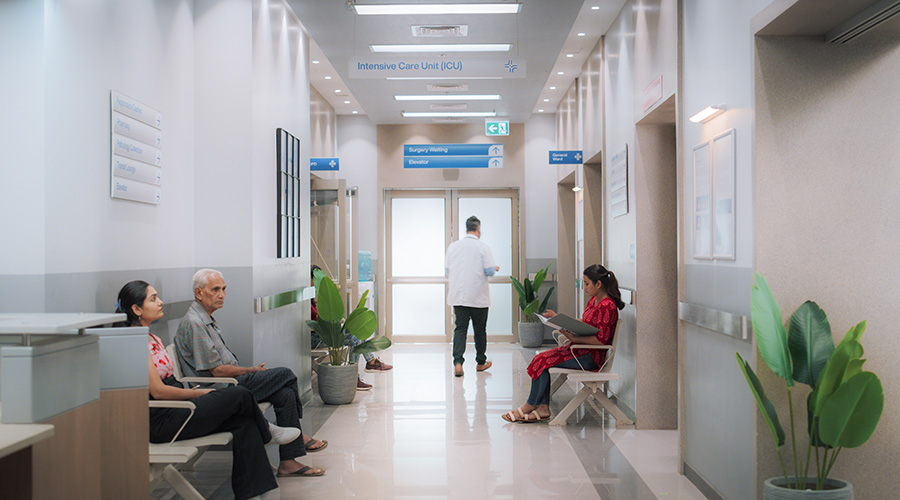
Encouraging project team stakeholders to communicate, collaborate, care and align around a common goal.
Healthcare facilities are at an inflection point. Administrators, architects and facility managers face converging challenges— aging infrastructure, staff shortages and rising patient expectations — while being asked to deliver more with less. Whether renovating a clinic or constructing a new tower, success depends not only on technical expertise but on how well project team stakeholders communicate, collaborate, care and align around a common goal.
This Four Cs framework of communication, collaboration, caring and common goal has become a guiding lens for redefining success in healthcare design and construction. Applied consistently, it can bridge silos, mitigate risk and keep patient well-being at the center of every decision. Our firm recognized healthcare leaders have this need, and it became the philosophy of our work and firm’s founding — to ground project work in the four Cs.
Communication: The foundation of trust
Amid this complex landscape, the first and most critical step toward stability is strengthening how teams communicate. In healthcare construction, communication is not just a management tool. It’s a lifeline. From planning meetings to final commissioning, the pace and clarity of information exchange often determine whether a project stays on schedule or falters.
Many organizations struggle with thinning layers of mid-level expertise. Senior professionals are stretched thin, while younger staff are eager but under-mentored. This imbalance creates gaps that ripple through design and construction, affecting documentation, response times and quality.
The remedy is proactive communication. Successful teams establish clear protocols early — standing coordination calls, shared cloud platforms for submittal tracking and defined escalation paths for time-sensitive decisions. Consistency builds predictability, and predictability builds trust.
Equally important is empathetic communication. When schedules are tight and change orders are inevitable, transparency and tone matter. Teams that approach challenges with honesty and professionalism turn clients into partners, ensuring decisions are informed, timely, and grounded in shared understanding. Yet even the clearest communication falls short without collaboration that unites every voice in the process.
Collaboration: Aligning many voices
Healthcare projects involve a complex network of administrators, physicians, contractors, engineers, and donors, and each has different pressures and priorities. So collaboration is not just teamwork. It is orchestration. Friction often arises when teams work in silos. Architects might progress on design intent while operators finalize clinical requirements late in the process, leading to redesigns and delays.
True collaboration begins when all stakeholders engage early. Through pre-planning workshops and iterative design sessions, teams can test assumptions, co-develop solutions and resolve challenges before they escalate. In fast-paced renovations, this integrated approach enables real-time problem-solving and faster decision-making.
Technology supports this effort. Building information modeling (BIM), digital collaboration platforms and emerging AI-assisted coordination systems streamline data flow and reduce redundancy. But tools alone do not create collaboration. People do. Technology works best when guided by human judgment that interprets, validates, and applies information meaningfully.
By blending human insight with digital precision, teams can make smarter decisions earlier by reducing errors, controlling costs and improving delivery. But beyond coordination lies the deeper reason these spaces exist — the human purpose that defines caring.
Caring: The human imperative
While schedules and budgets track progress, caring defines purpose. Healthcare exists to heal and support people in their most vulnerable moments, and every space should reflect that mission.
Amid the pressures of procurement and compliance, the human experience can be lost. The four Cs re-center care, not only for patients but for the teams delivering these projects. Leaders who mentor and support their teams foster resilience and engagement, especially in an era of burnout.
This mindset extends to innovation. As firms explore AI and data-driven design, caring means balancing ambition with realism. AI’s growing potential to analyze vast data streams, predict equipment failures and optimize maintenance offers meaningful opportunities for efficiency and reliability. But these systems are most effective when thoughtfully implemented and validated by experienced professionals.
Rather than chasing technology for its own sake, caring means piloting new ideas collaboratively and learning alongside clients. This approach safeguards quality, builds trust and ensures innovation enhances rather than disrupts project delivery.
Ultimately, caring ensures that success is not measured by awards or advanced technology but by the way facilities support patients, families and caregivers from day one. That same empathy must scale beyond individuals to guide teams toward a shared sense of mission, which is a common goal that anchors every decision.
Common goal: Alignment that endures
Every healthcare project begins with a purpose: to create environments that enable healing, safety and efficiency. Yet that purpose can splinter as budgets tighten and pressures mount. The final C — common goal — keeps everyone moving in the same direction.
Agreeing on a shared objective requires more than a mission statement. Every team member, from project executives to field staff, must understand the way their daily decisions contribute to the end vision. This is especially crucial in healthcare, where even small missteps can impact patient readiness.
Visual project roadmaps help maintain this alignment by connecting each milestone to the outcome: first-patient use. Seeing progress through that lens reminds teams that their work extends beyond construction. It’s about restoring community health.
This shared vision is essential during crisis-level renovations or equipment replacements, when downtime is unacceptable. Over-communication and prefabrication strategies help expedite work while keeping the focus on safely reopening critical care areas.
A common goal also supports system-wide consistency. As healthcare systems merge, unified design guidelines and material standards ensure every facility expresses the same brand of care. Whether patients enter a small clinic or a major hospital, they experience the same sense of dignity and reassurance. Applying these principles in practice reveals how the four Cs address real-world pressures, from workforce shortages to budget strain and system mergers.
Navigating the Realities: Workforce, Budgets, and Mergers
Beyond philosophy, the four Cs approach offers tangible solutions to the industry’s most pressing challenges:
Talent gaps. The loss of mid-career professionals has left a void between junior and senior staff. Embedding mentorship into daily workflows through site visits, cross-discipline check-ins and peer reviews helps preserve knowledge and maintain quality.
Budget pressures. Tight budgets often pit infrastructure upgrades against patient-focused improvements. Collaborative planning among owners, architects and contractors helps prioritize investments that deliver operational efficiency and human benefit.
System mergers. Consolidations create complexity around standards and specifications. Consistent communication and collaboration across entities ensure that integration strengthens, rather than fragments, organizational identity.
Across these challenges, the four Cs approach acts as a compass and remind teams that while pressures shift, the principles of trust, partnership and purpose remain constant.
Healthcare leaders increasingly recognize that design excellence alone cannot guarantee success. The most admired projects, which open on time, under budget and immediately feel right, are built on strong relationships.
When communication flows freely, collaboration transcends contracts, caring shapes culture and a common goal drives every decision, outcomes improve, meaning fewer requests for information, smoother inspections, safer facilities and happier clients.
Perhaps the greatest benefit is cultural. The four Cs cultivate an environment where people feel heard, valued and united by a shared mission. That sense of alignment extends beyond any single project, influencing the way organizations approach future challenges.
Building better healthcare is an ongoing process — a continual refinement of the way teams listen, learn and serve. The four Cs provide a language for that journey, reminding everyone that success is not the ribbon-cutting but is the lives improved within the walls they have built.
In an era of constrained resources and high expectations, healthcare organizations cannot afford to let miscommunication or misalignment derail their projects. The four Cs offer a replicable framework for achieving project excellence and human impact. That is the reason the four Cs are the core values that drove our founding and drives our daily work. When teams embrace these principles, they do more than complete a building. They create a place where healing can begin. That is the true reward of healthcare design.
Amanda L. Gorning, AIA, LEED AP, NCARB, is principal and founder of C4 Architects.
The post "Rethinking Strategies for Construction Success" appeared first on Healthcare Facilities Today