

How Westfield Modernized 18 Buildings Without Losing Its Past
February 20, 2026
Case study: Facing decades of deferred maintenance and soaring energy costs, Westfield, Massachusetts partnered with Siemens to modernize 18 municipal and school buildings.
For more than 350 years, the people of Westfield, Massachusetts have looked to the future. Settled in 1660 and incorporated in 1669, Westfield was the westernmost settlement in the Massachusetts Colony for over 50 years. Since then, it has evolved from an agricultural community to an industrial City, to a knowledge center, anchored by Westfield State University.
While Westfield continued to move ahead, much of its infrastructure remained stuck in the past. Municipal and School buildings relied on antiquated mechanical systems that weren’t properly maintained. Keeping some facilities operating at even the lowest standards was such a drain on City resources that demolition appeared to be the best option. It seemed that modernizing Westfield would be expensive and require destroying its past.
Today, Westfield is a city in transformation. Leveraging smart planning and energy-efficient technologies, it is modernizing its infrastructure while preserving historic buildings at the heart of its community. With the help of Siemens, the City upgraded 18 buildings — significantly reducing its energy spending, increasing safety, and enhancing these assets to serve the needs of future generations.
Assessing the Problem
In 2010, deteriorating infrastructure was an issue the City’s leaders and officials knew needed to be addressed with a sense of urgency. There were telltale signs throughout Westfield: at the Westfield Technical Academy Upper Campus, classroom windows were left open in December to provide relief from an overworked steam boiler system; meanwhile, at City Hall buckets were distributed during rainstorms to catch leaking water.
The culprit was deferred maintenance. Many of the City’s buildings, such as Westfield Technical Academy and City Hall, dated back over 70 years and still relied on their original equipment. At the same time, regular maintenance of buildings was scaled back when, in actuality, more maintenance was needed to care for the aging infrastructure.
“One of the problems we had in Westfield was that we didn’t have a central point of maintenance for City and School buildings,” recalls one of the City’s officials. “There was no advocacy for our infrastructure; it was very easy to push off to another day significant building needs.” As a result, students, teachers, and City employees were made to learn and work in buildings that were uncomfortable at best and unsafe at worst.
Deferred maintenance was also impacting the City’s budget. Due to a lack of building automation, mechanical systems were over-operated. The overuse of old, inefficient equipment generated higher-than-needed electric and gas bills for the City — sapping funds that could be more usefully spent.
Evaluating Options
To begin tackling the problem, Westfield completed a needs assessment and cost-benefit analysis evaluating infrastructure issues and potential solutions. One option put forward called for the abandonment and replacement of buildings where conditions were dire.
Replacing and rebuilding these buildings would be very expensive, projected to be hundreds of millions of dollars. Just as important as the costs, some buildings, including the nationally-registered, historic City Hall building, were significant to Westfield’s sense of community. The City’s officials removed demolition as an option and focused on rehabilitating existing structures so they could serve the City for the next 50 years and beyond.
The Westfield leadership team evaluated various options for completing infrastructure improvements. This included partnering with the Massachusetts School Building Authority (MSBA), which provides financial assistance to the Commonwealth’s public schools through its Green Repair and Accelerated Repair programs.
The team also issued an RFQ for an energy services company, or ESCO, to help them identify and implement energy-efficiency modernizations and improvements at Municipal and School buildings. Since Westfield was not sure of the full extent of the infrastructure challenges or the potential solutions, they did not tie the RFQ to a specific project. This gave the participating ESCO the chance to identify and present to Westfield a host of improvement options and gave Westfield the option to accept the plan most beneficial to the City.
Selecting an ESCO
Among the ESCOs responding to the RFQ was Siemens. Siemens enjoys a strong reputation in Massachusetts, and they had just completed an energy infrastructure and modernization program with another nearby city.
Siemens provided an excellent match for Westfield’s needs.
“What Westfield wanted was to understand all the challenges they faced and the different options for solving them,” recalls one of the Siemens account executives. “That’s exactly the Siemens approach. We evaluate each building and its challenges, systems, and potential solutions, then we present that information to the client and, with them, we start listing priorities and making decisions.”
Tammy Tefft, Westfield’s chief procurement officer and project manager describes the interview process, “While the other people we interviewed talked to us, Siemens pulled the tables together and talked with us. They asked about our buildings; they had done their research; they knew about our other opportunities for financing; they took the time to find out about Westfield. When they got done, I said to the committee ‘This is the team we should be putting in Westfield.’”
Based on its approach and experience Westfield selected Siemens as its ESCO for the initiative.
Completing a City Wide Audit
The first step in transforming Westfield’s infrastructure was completing an audit of the City’s 40-plus municipal and school buildings. An energy audit is used to identify initial areas of focus; as potential solutions become more defined, research and metrics are incorporated to specify potential savings.
As part of the audit, Siemens worked closely with City officials to understand their priorities and needs. This included understanding the energy modernization program with respect to other infrastructure projects being conducted by the City. Looking at the big picture, Siemens could better help Westfield maximize the impact of all its investments.
For example, the Massachusetts School Business Authority (MSBA) was committing funds to upgrade boilers at a number of Westfield’s Schools, including the Westfield Technical Academy’s Upper Campus. Siemens, in turn, would upgrade the School’s ventilation and controls. Close coordination was critical to ensure success of the project.
Most importantly, the audit helped establish a plan to move forward. “The audit told us that our buildings were in tough shape,” recalls Tefft. “It was a little bit daunting. Everything seemed important, but Siemens helped us narrow our focus and make it manageable.” When the audit was complete, Westfield had a plan for over $40 million in upgrades impacting 18 buildings throughout the City in a phased approach. Updating antiquated HVAC systems and installing a City-wide energy management system were the main areas of focus.
Modernizing the Upper Campus
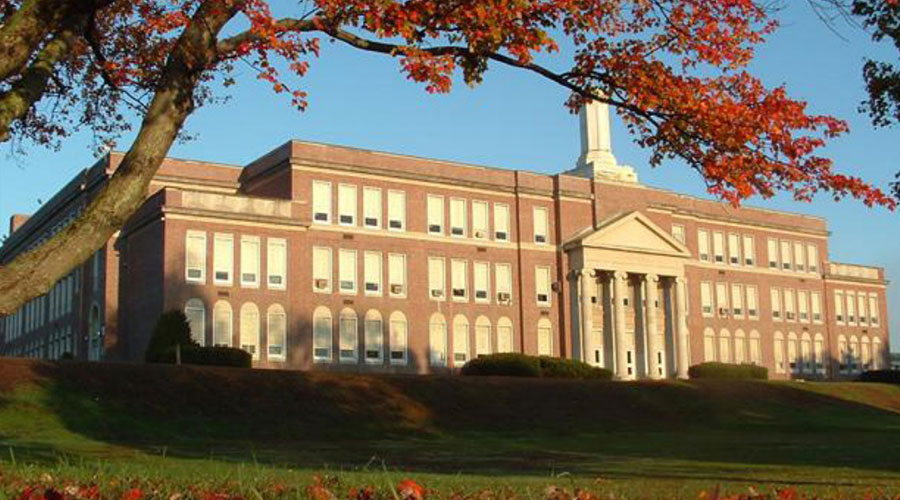
Westfield’s makeover began in earnest in June 2012 and included major improvements to the Westfield Technical Academy’s Upper Campus building. Built in 1929, the Upper Campus was Westfield’s original high school and an important part of the City’s history. Having fallen into disrepair, it was also seen as a liability; so much so that the MSBA considered closing it down and constructing a new facility at a cost of more than $100 million. Based on the findings of the energy audit and recommendations provided by Siemens, and working with the MSBA, Westfield decided the Upper Campus could be modernized at a fraction of the cost.
The primary challenge was the aging steam heating system. “The building had an old steam system from the 1920s; it had been converted from coal to oil, but it was still mostly the original equipment,” recalls one of the Siemens account executives Through the MSBA Green Schools program, Westfield could secure funding for new steam boilers, which would still have left other heating and ventilation components of the antiquated system. Siemens, Westfield, and the MSBA worked together to come up with an alternate approach whereby the MSBA replaced the steam boilers with more efficient forced water boilers, and Siemens retrofitted the heating and ventilation systems to accept hot water.
The other challenge facing the Upper Campus was the lack of building controls. With just one thermostat for a three-story building, teachers had little control over the indoor environment. Temperatures on the third floor could be 15 to 20 degrees warmer than on the first floor, and air quality suffered all around, with CO2 readings exceeding the recommended level.
To combat this issue, Siemens installed environmental controls and a new air handling system. Now, each classroom’s environment can be controlled individually. This leads to a better learning environment and greater energy savings — temperature and ventilation can be set to ideal levels when class is in session and then set back to a more efficient mode when rooms are unoccupied. “This is really important for high schools, where you have 30 kids in a room for a period and then no one for the next two periods,” adds one of the Siemens account executives. “If you’re ventilating properly you can save a lot of energy.”
While work was going on at the Upper Campus, Siemens completed other major infrastructure improvements at facilities throughout Westfield. Projects included:
- Southampton and Highland Elementary Schools — Similar to the work at the Upper Campus, both schools were converted from steam boiler systems to forced water boilers, and new environmental controls were added.
- Police and Fire Department Buildings — The Westfield Police Department replaced its aging roof and upgraded its boiler system. The Fire Department Headquarters also replaced its roof, and heating systems were upgraded at the Southampton and Western Avenue fire stations.
- Westfield Public Library — Siemens replaced the library’s aging chiller with a new, energy-efficient, air-cooled chiller.
- Municipal Buildings — Other municipal buildings completed major mechanical or furnace upgrades to enhance overall efficiency.
- City-wide EMS — Siemens installed a new energy management system at all upgraded buildings. In addition, other school buildings that saw boiler replacements as part of the MSBA program were also tied into the City-wide energy management system.
Siemens completed the majority of infrastructure projects during the summer months in order to make Schools ready by the time classes started in the fall. All the new heating systems were operational by that October, ready for their first test that coming winter. “Siemens came in here and their level of expertise was amazing,” recalls Tefft. “We have a lot of older buildings in this town that are not cookie-cutter, they are not easy; Siemens was able to see through all that and deliver solutions.”
Western Avenue Fire Station: Smart and Efficient
The new heating system at the Western Avenue Fire Station is a good example of Westfield’s smart, value-driven approach to energy efficiency. When it came time to replace the old, steam-fired boiler at the station, which also doubles as a maintenance garage, Siemens recommended a radiant floor heating system. In a radiant floor system, hot water piping is placed under the concrete floor, making the concrete part of the heat distribution.
“With the old system you had heat coming out of a vent in the wall,” explains one of the Siemens account executives. “Unfortunately, with high ceilings the hot air went straight to the top of the garage. It never got down to the mechanics on the floor, and when the door opened, all the heat escaped.”
With the new radiant floor heating system, the heat is where the mechanics are — on the ground — which increases comfort and reduces energy waste.
“Radiant heating is hugely efficient and provides incredible comfort,” adds a member of the Siemens project team.
Making City Hall Efficient
The second phase of Westfield’s infrastructure improvements focused on three buildings — Westfield City Hall, Westfield High School and Westfield Technical Academy’s Lower Campus. The City Hall building was the most critical.
Westfield’s City Hall opened in 1892 as part of Westfield Normal School, precursor to today’s Westfield State University. Ownership transferred to Westfield in 1959, and this building has served many roles since. Westfield City Hall is a nationally-registered historic building and holds a special place in the community.
Like Westfield Technical Academy’s Upper Campus and many buildings in Westfield, aging equipment and deferred maintenance had taken a toll on City Hall. The City made emergency structural repairs in 2009 and installed energy-efficient windows, a new roof, and building envelope improvements the following year. Still, significant infrastructure upgrades were required to make the building suitable for Westfield’s needs; building a new City Hall was considered.
Working with Siemens and engineering consultants, Westfield outlined a plan to make needed upgrades cost-effectively and preserve this historic building for future generations. Notes one of the City officials, “We knew if we didn’t invest quickly in saving this building, we were going to lose a treasured asset.”
Infrastructure improvements made by Siemens enhanced the indoor environment and reduced future energy and utility bills. Siemens coordinated its construction to be done in conjunction with other, ongoing structural repairs. They included:
- Replacing an aging steam boiler with two, new, high-efficiency condensing boilers from local manufacturer, Mestek, and installing a new panel radiator system
- Upgrading the domestic hot water system with a well-insulated, indirect storage tank and new piping
- Removing 57 window air conditioning units and replacing them with a new variable refrigerant volume (VRF) system
- Installation of a new, high velocity air conditioning system for the City Council Chambers
Increasing Efficiency, Preserving History
Westfield’s infrastructure improvement program is as much about preserving the City’s history as it is about bringing its buildings into the 21st century. Through the program, Westfield was able to save two buildings important to its history and the community — Westfield Technical Academy’s Upper Campus and Westfield City Hall. Due to infrastructure problems stemming from deferred maintenance, demolition was considered an option for both. Westfield’s City Hall building dates back to 1892; the City’s university, courts, and clerks offices have all called it home.
Renovations there have improved the safety and working environment for City employees and visitors while maintaining its historical charm, including the original moldings and wainscoting.
“With all the improvements, we now have a very modern, energy-efficient, high tech 1890’s building,” adds one of the City leaders. “It’s a great place to come to work every day.”
Westfield Technical Academy’s Upper Campus was built in 1929 as Westfield’s first high school. Its three-story design and position atop a hill made it an ideal watchtower during WWII. To complete its renovation, the old beacon at the top of the school was relit with a new, energy-efficient LED light — a symbol of how Westfield has modernized its infrastructure while preserving its historical buildings for future generations.
- Adding an energy recovery ventilation (ERV) system to serve areas where no proper ventilation existed
- Ensuring code-compliance of electrical system and installing a new primary transformer, switchgear, and panel boxes
- Installing energy-efficient lighting as well as occupancy sensors that prevent energy waste
- Connecting all the existing HVAC systems to Westfield’s City-wide energy management system
“City Hall is magnificent,” observes Tefft. “We were able to accomplish so much. We’ve increased the comfort level and have seen a huge decrease in the use of utilities. Its one of the best achievements we’ve had here in the City.”
In addition to the revitalization of City Hall, Siemens completed major mechanical upgrades to Westfield High School and Westfield Technical Academy’s Lower Campus during the second phase of improvements. Both schools, like City Hall, were connected to the new City-wide energy management system.
Quantifying Results
Modernizing its infrastructure was a significant investment for Westfield. But by focusing on improving existing facilities, as opposed to replacing them, the City generated significant savings. Tearing down and replacing Westfield Technical Academy’s Upper Campus would have cost the City’s taxpayers more than $100 million. The improvements completed cost just $14 million and have preserved an important, historic building for generations to come. Similarly, Westfield modernized its City Hall building at a fraction of the cost of replacing it or moving to other facilities.
In addition to creating safer, more healthy environments within existing infrastructure, Westfield’s modernization is generating significant savings in utility expenses. Due to the improvements made, the Upper Campus’ heating fuel consumption decreased 39% in one year. Results at Southampton Road School were more impressive: natural gas consumption was down 59%. Overall, Westfield’s schools spent $300,000 less on heating gas in the year following the first phase of renovations.
Westfield can expect savings for years to come. Its contract with Siemens includes performance-based guarantees. For work completed during the first phase of renovations, Siemens is guaranteeing $100,000 in energy savings annually over the course of 20 years. If savings fall below that level, Siemens finances the difference.
“In a lot of different ways the general public will never see, going down the path of energy efficient buildings will save this City significant dollars for the future,” notes one of the City leaders. “And, just as importantly, we were able to preserve the historic nature of these buildings for the next generation and generations after that.”
Looking Ahead
With significant improvements made to its infrastructure, Westfield is now looking to build on its successes.
Taking a more proactive approach to maintenance is a top priority. Through a three-year agreement, Siemens is providing maintenance on all new equipment installed during the infrastructure improvements. Additionally, Siemens helped Westfield craft a comprehensive, City-wide maintenance plan and will implement it alongside the City’s new facilities director. The goal is to keep City infrastructure operating as efficiently as possible and maximize the value of Westfield’s investment.
“Our role is to be a continuing resource for Westfield and its facilities director, because there’s still a lot of work that they want to get done,” says one of the Siemens account executives.
In addition to proper maintenance, Westfield is working with Siemens to identify additional improvements that will increase efficiencies at municipal buildings — generating more energy and operational savings.
“On coming into office, I wanted to address our problems, but I also really wanted to leave a plan for my successors to chart the future,” notes a City official. “The planning that’s been laid down over successive phases makes it a really promising future.”
One facility that’s been targeted is Westfield’s wastewater treatment plant. Planned improvements include replacement of an energy-wasting blower system for aeration and installation of a new, more efficient boiler system.
More targeted energy-efficiency upgrades at City buildings are also on the horizon. These include replacing older, inefficient lighting with new, more energy-efficient fixtures and adding occupancy sensors. When coupled with the efficiency improvements already in place, these are small projects that can have a big ROI when looking at future energy bills. They are also representative of Westfield’s more modern, forward-thinking approach to infrastructure — focusing on responsible, value-driven ways to preserve this historic City for future generations.
By FacilitiesNet Staff
The post "How Westfield Modernized 18 Buildings Without Losing Its Past" appeared first on FN Prime Maintenance & Operations