


Photo finish
Security is no longer just about locked doors and reception checks. Workplace security is moving faster than ever, and many businesses are struggling to keep up with it. Digital technology has changed how we think about access to buildings, and any organisation still relying solely on a non-secure physical photo ID risks falling behind.
It is critical that anyone who is responsible for IT, cybersecurity, networks, databases and API’s (Application Programming Interfaces) incorporates photo ID into their wider security strategy.
Many businesses still view photo ID as nothing more than a PVC badge on a lanyard or a visual tool to show who belongs in the building and who doesn’t. While a few years ago this would’ve been seen as the standard for good security, we are seeing these systems very quickly become outdated and easy to clone. Nowadays, identity cards are still the foundation of physical security, but they are also deeply intertwined with your company’s digital security strategy.
SECURITY EVOLUTION
Workplace security has evolved rapidly over the past decade, with the number of people in cybersecurity roles tripling in the last five years. This shift has been driven mostly by the fact that cybercrime very quickly became much more organised. At the same time, remote working went from rare to the norm, so security was no longer location-dependent, it now had to follow the employee to wherever they work.
Most businesses have invested heavily in cybersecurity tools, firewalls, endpoint protection and cloud security, yet many are still operating photo ID systems that sit entirely outside their wider IT strategy. That creates a dangerous disconnect. If your ID cards are not integrated into your access control systems, your HR database, your network permissions and your wider identity management processes, then you are ineffectively managing risk in silos and therefore creating vulnerabilities.
Photo ID is no longer just about being able to visually recognise staff. It is about controlling and auditing access to buildings, to secure areas and increasingly to systems. Modern ID solutions can integrate directly with network credentials, single sign-on environments, and API-driven databases. That means when an employee joins, change’s role or leaves the company, their access rights can and should update automatically across the organisation. If that process is manual, fragmented or delayed, you create gaps that expose the business to risk.
BRIDGING THE GAP
One of the biggest issues is businesses treating physical security and cybersecurity as two separate conversations. They are both rooted in identity. If someone can walk into your building unchallenged because an outdated badge system is not properly managed, that becomes a cyber risk as well as a physical one. The same applies if former employees retain active credentials because systems are not integrated. Identity is the bridge between physical and digital security.
Forward-thinking organisations are now incorporating photo ID into their wider IT and cybersecurity strategies. They are ensuring badge issuance is tied to secure data management policies. They are integrating access control with HR systems. They are using APIs to connect ID management with network authentication tools. Critically, they are ensuring that data protection and compliance standards are applied to ID systems just as rigorously as they are to any other database containing personal information.
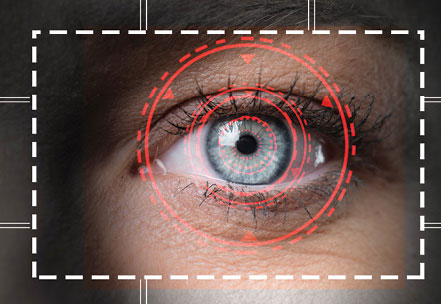 IMAGE STORAGE
In practical terms, this means that storing staff photos digitally, whether in badge systems or access control platforms, must follow the same rules as HR records under regulations like UK GDPR. Images are classed as personal data, so they must be stored securely, typically using encryption, with access limited to authorised staff only. There also needs to be a clear, documented reason for collecting and keeping them.
Modern systems operate like secure digital filing cabinets, where photos are uploaded, protected, and only accessed when needed for identification or entry. Facilities managers should also ensure retention policies are in place, so images are deleted when no longer required, such as when an employee leaves.
CONCLUSION
For organisations, the message is simple. If photo ID still sits purely under facilities or is treated as an administrative afterthought, it may be time to reassess. Security threats are more sophisticated, workplaces are more flexible and regulatory expectations are higher than ever. An outdated approach to identity management does not just look old-fashioned, it can signal wider vulnerabilities.
Ultimately, modern workplace security starts with knowing exactly who has access to what, when and why. Photo ID should be part of that strategic conversation, not separate from it. Businesses that recognise this convergence between physical and cyber security will be far better positioned to protect their people, their data and their reputation.

Adam Bennett, a photo ID card specialist at Digital ID, warns that photo ID can no longer be used as a physical security measure but one which incorporates digital security
The post Photo finish appeared first on FMJ.