

Are You Ready For NFPA 70B?
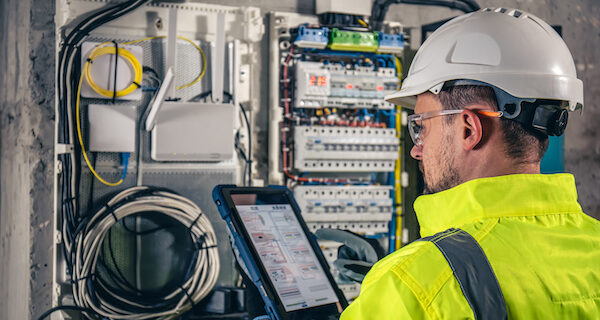
For decades NFPA 70B has served as a recommended practice for Electrical Equipment Maintenance, becoming a resource for many organizations seeking to improve electrical system reliability. A major shift in 2023 replaced the word ‘recommended’ with ‘shall,’ transforming voluntary guidance into a mandatory standard.
Not only does this change support the broader compliance landscape, but it mirrors the trajectory of NFPA 70E. When 70E introduced requirements for electrical safety in the workplace, it fundamentally reshaped how employers managed electrical hazards. NFPA 70B now does the same for electrical maintenance, bridging the gap between operational reliability and workplace safety.
How NFPA 70E Paved The Way
Most are familiar with NFPA 70E as the measure of due diligence for worker safety. It filled the gap between OSHA electrical safety requirements in the late 1970’s by providing a detailed “how to” and consensus standard for protecting workers from electrical hazards. NFPA 70B follows a parallel path. Where 70E focuses on safe work practices, 70B defines the maintenance practices necessary to ensure the equipment itself remains safe and dependable. In other words, 70E protects the person, while 70B protects the system. Together they set the foundation for organizational regulatory compliance.
The Renewed Focus On Compliance
With new mandates comes new exposure. Compliance has taken center stage for good reason. Compliance helps organizations avoid hazards before they escalate into costly incidents.
NFPA 70B now outlines specific requirements for how electrical systems must be maintained, including documentation, inspection, testing, defining qualified personnel, and recordkeeping. The standard now sets clear expectations for how maintenance must be managed, executed, and verified.
Insurance carriers, regulatory bodies, and internal risk managers are increasingly linking electrical maintenance practices to liability exposure. NFPA 70B is no longer a “nice to have.” It carries clear expectations and real consequences when delayed. The message is not meant to be punitive, but preventive. To understand how these expectations take shape in practice, NFPA 70B defines several key program requirements that form the backbone of a compliant maintenance strategy.
Key Requirements Of NFPA 70B
The updated NFPA 70B standard establishes a clear framework for maintaining electrical systems safely and reliably. At its core, it calls for a documented Electrical Maintenance Program that aligns with company goals and integrates into the organization’s overall Electrical Safety Plan (NFPA 70B, Chapter 4). This program defines who is responsible, how maintenance is performed, and how practices evolve as systems and technologies change, creating a structured foundation for long-term reliability.
Building on that foundation, the standard shifts maintenance planning toward risk-based decision making. Facilities are expected to evaluate and categorize equipment based on how critical it is to operations and how likely it is to fail (NFPA 70B, Chapter 9.3). This helps ensure that maintenance efforts focus on the assets that present the greatest potential risk to safety, performance, and uptime.
NFPA 70B also modernizes how maintenance is scheduled. The standard moves away from fixed intervals to a condition-based approach, using performance data, testing results, and environmental factors to determine when maintenance is truly required (NFPA 70B, Chapter 9). This replaces the old ‘set it and forget it’ approach, reinforcing the need for documented testing and traceable records that prove systems operate safely and as intended.
Whether managing a single facility or a national portfolio, these requirements are scalable and adaptable, helping organizations strengthen both operational reliability and electrical safety.
The Cost Of Noncompliance
While NFPA 70B itself is not federal law, it is now a consensus standard, meaning it represents industry-recognized best practice. OSHA can use it to demonstrate that an employer failed to mitigate a known hazard under the General Duty Clause.
In practice, if an incident occurs and evidence shows that electrical equipment was not properly maintained, it can be used against the employer or equipment owner. Beyond regulatory implications, noncompliance carries real financial risk, affecting insurance coverage, workers’ compensation claims, and even the outcome of civil litigation.
When organizations weigh the cost of compliance, it is easy to focus only on the immediate investment in testing, documentation, or program development. But the true cost often lies in what happens when compliance is neglected. The most visible impact may come through OSHA citations or fines, yet those are often the smallest part of the total loss.
Unplanned failures and emergency repairs can stop production, delay projects, and drive-up costs. The financial and legal fallout can be just as damaging, from higher insurance premiums to costly settlements. But the greatest loss often comes afterward. A serious electrical incident can tarnish a company’s reputation, erode trust, and take years to recover, while injuries and near misses weigh heavily on morale and weaken the culture from within. Compliance, then, is not simply a regulatory requirement, it is a business imperative that protects people, performance, and brand integrity. Fortunately, the path to compliance is clear and achievable with a structured approach.
Practical Strategies For Businesses
Understanding the legal and financial risks of noncompliance is only part of the picture, the real opportunity lies in prevention. Aligning with NFPA 70B begins with a clear plan. Every organization should establish a governing Electrical Maintenance Policy that defines maintenance objectives, responsibilities, and procedures in accordance with Section 4.2.1 of the standard. This framework sets the tone for accountability and consistent execution across all facilities.
Next, a baseline assessment or site audit helps identify gaps and prioritize high-risk assets. Those insights guide the development of site-based maintenance plans tailored to equipment condition, environment, and operational needs. Maintaining reliable documentation and detailed records supports these efforts, while continuous training ensures that maintenance is performed safely and consistently by qualified personnel.
Partnering with qualified electrical testing companies can strengthen program execution, ensure proper test methods are used, and provide third-party validation of maintenance results. When treated as a strategic investment rather than an obligation, compliance reduces downtime, improves reliability, and strengthens both safety and reputation.
The New Standard For Reliability
NFPA 70B represents a defining shift in the electrical industry. What was once viewed as best practice has become the baseline expectation for responsible operations. The standard now challenges organizations to demonstrate accountability not only to regulators and insurers but also to their employees and customers.
Those who act now to align with NFPA 70B will gain a lasting advantage, including safer workplaces, fewer outages, stronger relationships, and documented proof of due diligence. Compliance with NFPA 70B is not about checking boxes; it is about building a culture of reliability that protects both people and performance.
By Greg Smith
Greg Smith has over 25 years of experience in electrical power distribution systems. He has consulted with countless end-user organizations to help improve and implement comprehensive electrical safety programs, leading numerous large-scale, multi-site initiatives and implementing NFPA-based compliance programs across major facilities. With a BSEE and MBA, Greg combines deep technical knowledge with strategic insight. Driven by a commitment to improving workplace safety and reducing electrical hazards, his mission is to help organizations build stronger, safer electrical infrastructures and foster a culture where safety is prioritized at every level.