

Back to Basics: The Importance of Fire Detection in Commercial Facilities
Back to Basics is an article series that highlights important, but possibly overlooked, information facilities management professionals should know.
For commercial facilities, effective fire detection guidelines are not just a safety measure—they are a necessity. The U.S. Fire Administration 2023 Fire Estimate reported that over a 10-year span in nonresidential buildings, there were 110,000 fires, 130 deaths, and about 1,200 injuries, resulting in more than $3 billion in losses and reflecting a 19% increase in fires.
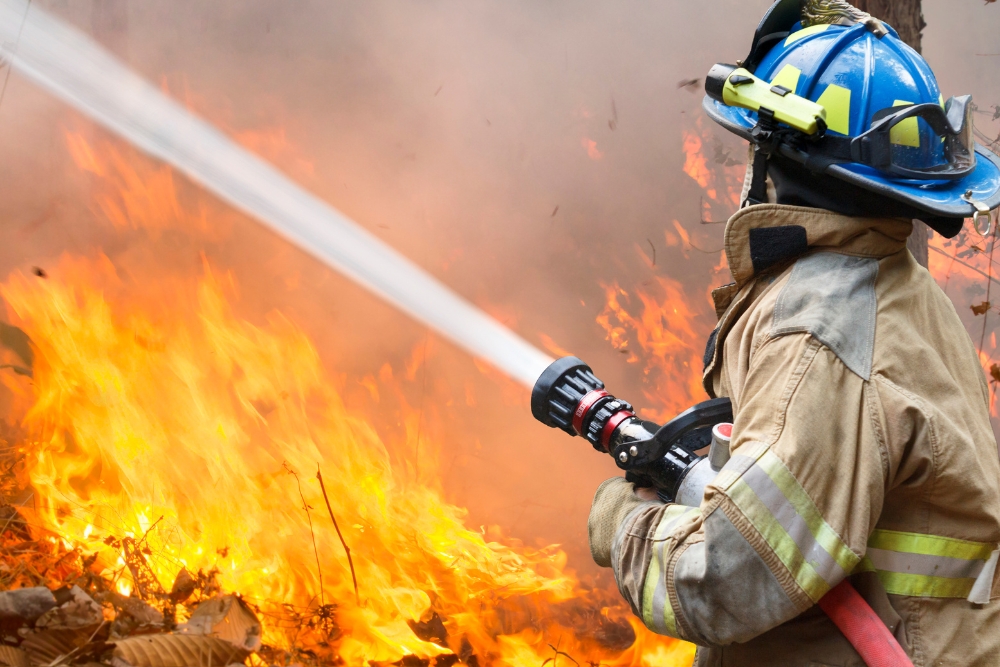
Commercial facilities house people, products, and businesses of varying needs and hazards. However, despite these variations, it is critical that commercial facilities establish and maintain clear and concise fire detection guidelines that protect both property and building occupants.
Understanding Fire Safety in Commercial Facilities
To establish and maintain fire safety precautions in commercial properties, facilities managers must first understand the codes, regulations, and technology that were designed to alert and protect those facilities.
Fire alarms and signaling systems are required in commercial facilities under NFPA 72, the National Fire Alarm and Signaling Code. The code outlines strict regulations on appropriate fire alarm applications and provides comprehensive guidelines on ideal locations and installation steps for facilities managers. As part of the code, regular inspection and maintenance are required to ensure alarms and detectors perform in emergency scenarios. Fire detection standards are required in commercial facilities; however, state and local guidelines can vary depending on a building’s size and location. To ensure fire detection standards are met, facilities managers must confirm with state and local authorities.
While detection and notification are the most important components of a fire safety program, education is a critical element. Building occupants should be informed through drills, training, or signage on the sound of alarms and the directions of exits. NFPA 101, the Life Safety Code, provides guidelines for exit access and protection to ensure exit pathways are safe in the event of an evacuation. Per this code, commercial facilities managers must work with staff managers within their building to ensure new and existing employees are properly trained on the building’s safe exit routes and that regular drills are performed.
Establishing and Maintaining Fire Safety Standards in Complex Spaces
As mentioned above, fire detection technology and education are key to fire safety standards and can help save lives in the event of an emergency. Establishing and maintaining fire safety standards in commercial facilities, however, can be difficult given the variations that often take place in a single facility. Some commercial facilities house different businesses with different risks that may already have safety standards in place. Businesses working with flammable materials or electricity, for example, can increase the risk of fire for an entire building. Working closely with business managers and employees can help educate facilities managers on the hazards, protocols, and training already in place among building occupants. In turn, facilities managers can establish an all-encompassing fire procedure that includes education and protocols.
In addition to understanding the hazards present in a building and the appropriate safety plan, ensuring technology is up-to-date and working is necessary for maintaining occupant safety. Malfunctioning and outdated technology pose the biggest risk to fire safety for commercial facilities. Obsolete technology, or detectors that are not properly maintained, for example, can result in missed or inaccurate alarms.
To combat this challenge, NFPA 72 requires facilities managers for unmonitored systems to conduct weekly visual inspections to observe any potential damage or obstructions. Fire alarm systems are required to be tested annually and some components more often.
Lastly, many local, state, and federal laws require annual checks with local authorities to ensure all safety precautions are working and up-to-date with the most recent code adoptions. As always, check with your local Authority Having Jurisdiction (AHJ) and your insurance underwriters for any changes in requirements.
The Future of Fire Safety Lies in Detection Innovation
Clear guidelines and building codes have been created and implemented to assist facilities managers in keeping their commercial buildings up-to-date and safe for occupants. But there is always room for improvement. Technology continually advances fire safety programs for commercial facilities and helps to ensure fire detection technology is easily updated and maintained.
Fire detection control units are now commonplace in commercial facilities. With the advent of remote connectivity, a facilities manager can monitor all active detectors, flag any faulty issues, and pinpoint the source of an alarm. Additionally, modern detection stations allow facility employees to monitor and manage entire systems from a computer workstation, ultimately allowing for better monitoring practices and improved emergency response. These systems typically offer self-testing capabilities, meaning facilities managers won’t need to run weekly or monthly tests that disrupt building operations.
Newly developed notification systems are helping guide building occupants in the event of an emergency. Particularly useful for building occupants that are unfamiliar with a building’s safety routes, addressable notification appliances can alert building occupants to the nature of an event through voice guidance and offer directions to evacuation routes. These solutions can typically be customized, making them an ideal solution for commercial facilities of varying needs.
Fire safety standards in commercial facilities have come a long way since the days of single, standalone smoke alarms that relied on batteries. Upgrading systems to the latest technology can ensure commercial facilities are compliant with fire safety codes and provide peace of mind for facilities managers operating complex buildings.

Dr. Rodger Reiswig, fellow and vice president of industry relations at Johnson Controls, has more than 39 years of experience in the fire industry, serving as a pioneer in building codes and standards. Reiswig currently serves as a member of the NFPA Standards Council and an immediate past trustee of its Fire Protection Research Foundation. In addition, he is immediate past chair of the National Electrical Manufacturers Association (NEMA) Signaling Section, BES-SB, and current parliamentarian of NEMA’s Codes and Standards Committee. He also serves as chair of the Electronic Security Association’s (ESA) Codes and Standards Committee.
The post Back to Basics: The Importance of Fire Detection in Commercial Facilities appeared first on Facilities Management Advisor.