

Clever Canine Helps Facility Managers Sniff Out Mold
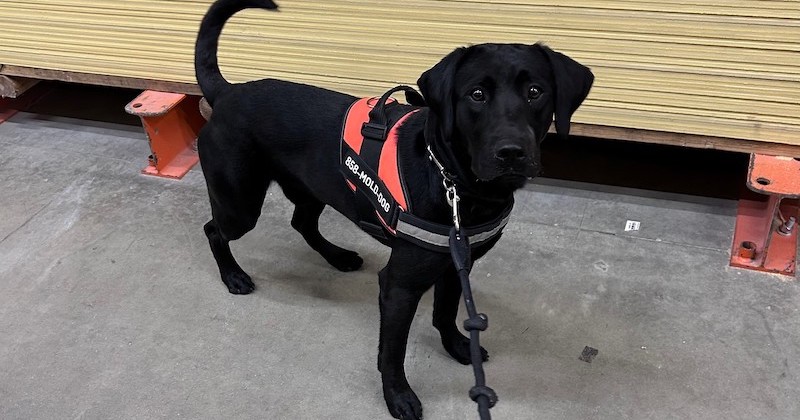
Facility executives understand that unplanned maintenance and asset degradation are costly — not only in direct repair expenses, but also in business-disrupting downtime, tenant dissatisfaction, and insurance liability. Mold, often undetected in its early stages, can inflict severe financial and reputational damage. Mold Hunt, LLC offers a proactive solution: a certified canine mold detection service led by Indy, a professionally trained mold-sniffing dog. Detecting mold early allows for precise intervention that can save facility portfolios up to $25,000 per incident or more — while preserving tenant operations and protecting bottom-line performance.
The Mold Imperative: What Facility Executives Must Know
Facilities face constant risks arising from water intrusion — leaks, HVAC condensation, faulty plumbing, and weather-driven moisture. Mold colonization often goes unseen in concealed spaces: behind walls, under flooring, inside ductwork, or within insulation. Adding to the danger are the variety of symptoms that mold exposure can cause among a facility’s inhabitants, including compromised health symptoms such as headaches, chest tightness, wheezing, sneezing, coughing. difficulty breathing, fever, nose bleeds and skin irritation.
For facility leadership, mold is not merely a maintenance issue, it is a strategic risk. When mold spreads unchecked:
- Remediation costs surge: Conventional remediation can range from $15,000 to $50,000 or higher, depending on structural involvement.
- HVAC contamination compounds expenses, potentially reaching six figures in cleanup and repair.
- Tenant operations and revenue paths are interrupted, leading to lease disputes or churn.
- Insurance claims may be denied due to negligent or delayed action.
- Health and liability concerns emerge, particularly in healthcare, educational, and high-occupancy environments.
With pressures on facility budgets and rising scrutiny over asset performance, executives require smarter, cost-effective detection, not just reactive treatment.
Introducing Canine Detection: Precision And Prevention Combined
Mold Hunt’s strategic advantage is discovering mold before visible damage occurs. Trained at one of the country’s most specialized academies, Indy is certified to detect numerous forms of mold, including Aspergillis (blue-green), Cladosporium (olive green), and the toxic Stachybotrys (black mold) in inaccessible spaces without resorting to disruptive testing, sample collection or exploratory drilling. He is one of only a handful of highly specialized mold dogs in the U.S. and is not harmed by mold since dogs do not inhale the dangerous particles like humans.
Canine mold detection aligns with a facility executive’s prioritized focus on non-disruptive, data-driven maintenance strategies by offering:
- Non-invasive and rapid deployment: most inspections are completed within two hours, with zero need for tenant displacement or structural breach.
- Flat-fee pricing: Mold Hunt’s commercial canine detection service starts at $950, delivering definitive findings and precise recommendations for targeted remediation.
- Pinpoint precision: canine alerts isolate mold growth down to specific areas, reducing over-remediation and unnecessary building interventions.
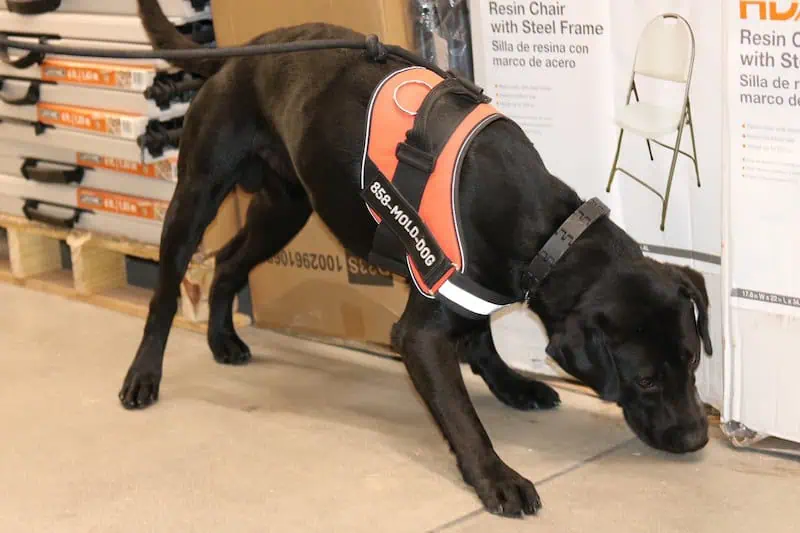
The result is threefold: lower remediation costs, continued tenant uptime, and enhanced decision-making via actionable intelligence.
Measuring Savings: Financial Impact In Real Terms
Let’s examine a typical commercial mold infestation using the traditional removal process. Mold testing and diagnostics might cost between $1,500 and $3,000, the remediation of the walls and insulation between $20,000 and $30,000 and the HVAC system cleanout between $10,000 and $50,000+, totaling upwards of $83,000 for this one incident.
Compare these figures with the affordable costs of canine mold testing and diagnostics: a flat $950 fee for Indy’s pinpoint assessment, yielding a lower amount of wall and insulation repairs estimating between $4,000 and $6,000 and a maximum ductwork cleanout of $1,000.
With budgets squeezed and ROI under constant scrutiny, canine mold detection services can realize up to $25,000 savings per incident, conservatively. Over a year, a single high-risk property experiencing just two mold warnings can save $30,000 to $50,000, with minimal impact to facility occupants and zero disruption to business operations.
As a recent example of Indy’s precision mold detection, a mixed-use center in Miami was experiencing elevated humidity. While no visual signs were present, tenants on the second floor reported a mild odor. A traditional method of mold remediation, including visual checks and random sampling would require exploratory wall openings, air sampling, and followup labs, costing $3,000, plus a potential ballooning remediation scope.
On the other hand, using canine mold detection, Indy isolated a four-foot area behind drywall on the second floor. Upon opening it, visible mold was confirmed, but only the identified section required remediation, completed for $5,000. Total cost: $5,950, with no other areas affected and tenants undisturbed.
The result: an estimated savings of $20,000. The total cost stayed well below traditional remediation thresholds while preserving tenant relations.
The Mold Hunt Process
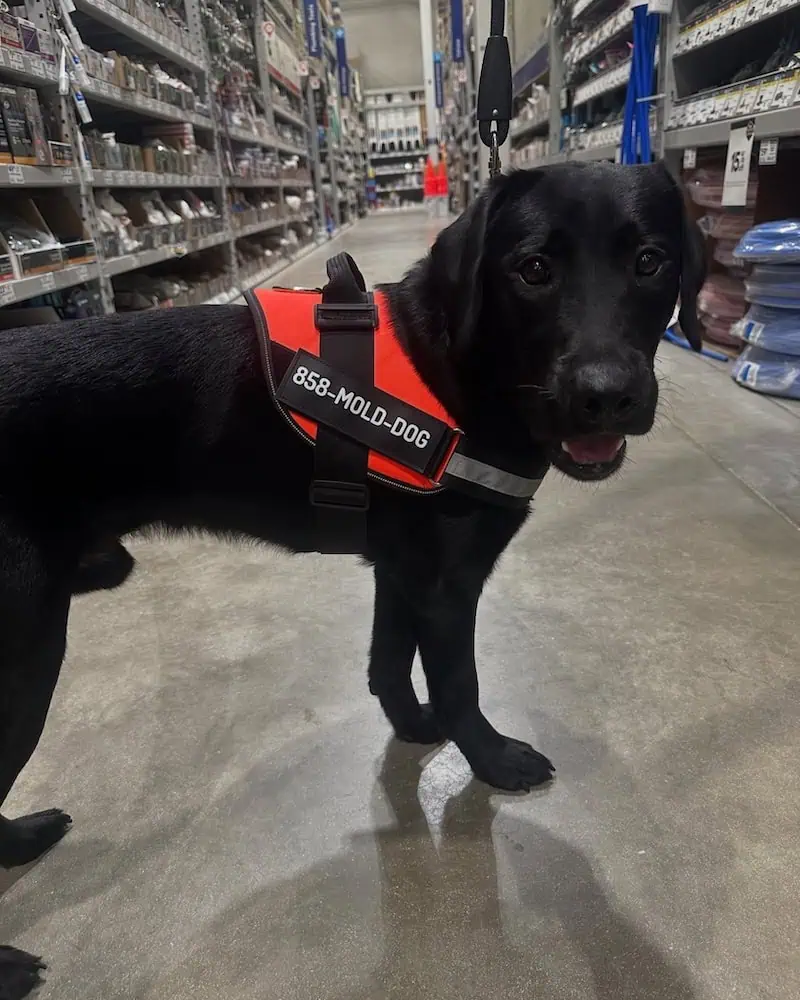
The canine mold detection process usually lasts one hour and consists of a thorough walkthrough of the commercial property both inside the building and around its external grounds. Information is gathered about the facility executive’s potential mold-related issues, noting any health changes in different rooms. Indy is then brought into the property to lead the inspection, sniffing out mold behind walls, in air ducts, under floors and other areas invisible to the human eye. When mold is detected, Indy alerts by sitting down and pointing to the exact source of mold with his nose. Once the alert is confirmed, he receives a food reward and praise. The entire process is quick and more than 90% accurate.
Other benefits of canine mold detection include:
- Eliminating downtime and tenant disruption
- Preserving indoor air quality and regulatory compliance
- Informing preventive maintenance protocols
- Strengthening insurance coverage and claims confidence
- Building stakeholder confidence
Integrating Canine Mold Detection Into Your Facility Strategy
Facility executives may choose to adopt canine mold detection into their building maintenance strategy for a variety of reasons, such as using it as a baseline audit, monitoring a seasonal event, a direct response to a tenant request, or contractual integration. Savvy executives who incorporate it into their annual facility management strategy are able to transform a historic environmental liability into a controlled, manageable cost center.
By Zaneta Kuzel
Zaneta Kuzel is founder and owner of Mold Hunt, LLC, a Florida-based provider of certified canine mold detection services that deliver fast, precise mold identification, enabling targeted remediation that preserves operations, minimizes costs, and enhances asset resilience. With their intense training and keen sense of smell, mold-sniffing dogs achieve a more than 90% accuracy rate and offer a fast, thorough non-invasive, and cost-effective review for safer operating spaces.
Read more facility management-related articles about mold contamination, detection and removal on Facility Executive.