

Future-Ready Campus Infrastructure
Higher education is experiencing one of the most accelerated periods of transformation in its history. Enrollment fluctuations, tightening budgets, rapid advances in research and instructional technologies, workforce shifts, and rising expectations for sustainability are converging to reshape what campuses need from their buildings. Institutions must not only support today’s operations but anticipate what tomorrow’s academic, research, and community demands might look like.
In this landscape, infrastructure—not just architecture—is emerging as the defining factor in institutional resilience. Campuses are increasingly moving away from static, program-locked spaces and toward future-ready infrastructure that enables continuous evolution, long-term operational efficiency, and meaningful ROI. Buildings must function like adaptive platforms—capable of serving new uses, new technologies, and new pedagogies without requiring major reinvestment every decade.
Resilient campuses are those that approach their physical assets as flexible, infrastructure-rich ecosystems. Future-proofing is no longer optional; it is a strategic imperative.
Infrastructure-Ready Design: The New Baseline For Campus Flexibility
Flexibility today requires much more than movable furniture and room dividers. It starts with systems, utilities, and structural frameworks that allow spaces to be reconfigured without extensive renovation. This is especially true for research and STEM facilities, where methodologies, equipment, and program priorities shift frequently. Designing around universal structural grids, modular lab frameworks, flexible service zones, reconfigurable rooms, and accessible MEP infrastructure enables institutions to pivot quickly while minimizing downtime.
Technology readiness is just as important. Hybrid instruction, remote learning capabilities, AI-driven tools, and digital-native coursework all require strong connectivity and adaptable learning environments. Buildings must accommodate a range of instructional modes and support growing digital infrastructure. Planning for system-level flexibility ensures that facilities stay relevant as teaching methods and expectations change. Future-ready academic environments include:
- Dense, upgradeable connectivity and robust IT closets
- Power and data access that anticipates emerging equipment
- Converged networks supporting AV, security, and building systems
Outside the classroom, institutions are brainstorming what to do with underutilized space in smart ways. Offices are being reconsidered in response to hybrid work. Oversized lecture halls, legacy mailrooms, and administrative spaces are being converted into much-needed housing, labs, or student amenities. Infrastructure-ready design guarantees these conversions can be carried out efficiently as priorities shift.
Adaptive Reuse As An Infrastructure Strategy—Not Just Sustainability
With capital limitations and growing deferred maintenance, adaptive reuse is becoming a strategy for renewing campuses. Reusing existing buildings allows institutions to reduce environmental impact, preserve character, and expand capacity without the disruption of new construction while potentially reducing cost.
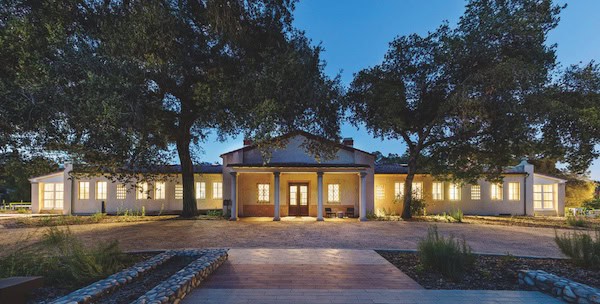
An excellent example of adaptive reuse is the transformation of a midcentury infirmary into the Robert Redford Conservancy, now a high-performance academic facility integrating natural ventilation, solar strategies, and durable materials, while maintaining the building’s original form. Other projects have converted former hotels to housing or adapted office buildings into academic spaces. These efforts extend the lifespan of campus assets while meeting more urgent needs.
Institutions are evaluating how to reuse what they already have, rather than defaulting to demolition, letting them adapt to changing demands while preserving resources.
Energy, Envelope Performance, And Operational Efficiency
As institutions pursue mandated embodied carbon goals and operational savings, energy-efficient infrastructure is now inseparable from future readiness. The most impactful strategies are introduced early in the design process. Proper siting and orientation maximize daylight, reduce heat gain, and lower long-term energy loads without increasing cost.
Investing in the building envelope provides another opportunity for long-term savings. High-quality insulation, glazing, shading, and airtight construction reduce mechanical loads and energy consumption. These strategies often allow mechanical systems to be right-sized, reducing both first cost and lifecycle expenses.
For existing buildings, energy audits and envelope studies help identify where improvements will make the greatest impact. Addressing heat loss or gain at the perimeter typically results in better long-term performance than replacing mechanical systems alone.
Daylighting also supports efficiency and well-being. Strategies like skylights, solar tubes, atriums, and interior reconfiguration bring natural light deeper into buildings. Even paint color and material reflectivity influence perceived brightness and comfort.
Modern zoning and controls grant more precise temperature regulation, replacing older systems that relied on single thermostats to set large areas. This improves occupant comfort and reduces energy waste.
Wellness Infrastructure: Designing For Well-Being, Safety, And Academic Performance
A future-ready wellness infrastructure supports mental health by creating a campus environment that is intuitive, calming, and connected to nature. Beyond offering a range of settings, such as private study rooms, collaborative zones, wellness spaces, recreation areas, and outdoor learning environments, buildings must integrate systems and design strategies that actively reduce stress and promote well-being. This includes providing access to fresh air through high-performance ventilation and operable facades, designing clear and low-stress circulation routes, and incorporating quiet zones where students can decompress. Biophilic materials, natural views, and easily accessible outdoor study or instruction areas further reinforce a sense of calm and connection, ensuring that campus infrastructure supports both academic success and holistic wellness.
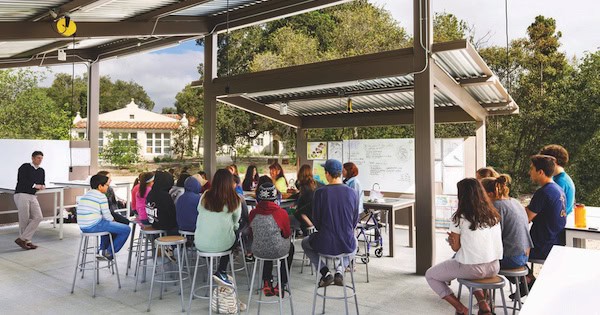
Outdoor instructional and recreation areas are becoming more important, particularly in climates that support year-round use. These environments give students access to fresh air, natural light, and movement, which support wellbeing and create additional options for study, gathering, and instruction. Integrating indoor and outdoor options promotes comfort and flexibility while boosting engagement.
Safety infrastructure is now a core element of campus design, addressing concerns around access, visibility, and emergency response. Layered access systems, smart surveillance, strategic exterior lighting, and integrated campus-wide security networks work together to create safer, more intuitive environments. When these systems are designed early, they can adapt as technologies and safety needs evolve, supporting long-term campus resilience.
Lifecycle Decision-Making And Integrated Design
Balancing first cost with long-term value remains a core challenge. While budget pressures might encourage lower-cost materials, these choices can often lead to higher maintenance and replacement expenses. Durable materials and efficient systems provide stronger performance across a building’s lifespan.
Decision-making tools such as Choosing by Advantage help institutions evaluate materials and systems based on cost, durability, maintenance needs, and environmental impact. Integrated design makes sure these decisions work together. For example, investing in a building envelope allows for smaller mechanical systems.
This approach supports practical design excellence: using resources efficiently so investments enhance performance and user experience.
Evaluating Long-Term Success
The success of a building is determined over time. Post-occupancy evaluations, including energy data, space utilization, and satisfaction surveys, help institutions refine operations and inform future projects.
Higher education is evolving quickly, and campus facilities must do their best to keep up. Infrastructure-ready design, thoughtful reuse, strong envelope performance, and holistic planning allow institutions to respond to new demands while maintaining long-term efficiency. By viewing facilities as adaptable, living assets, campuses can create environments that are resilient, flexible, and valuable for decades into the future.
By Craig Atkinson, AIA, NOMA, DBIA, LEED AP
From the December 2025 Issue

Atkinson, AIA, NOMA, DBIA, LEED AP, is the Director of Higher Education with Carrier Johnson + Culture. Atkinson leads the firm’s charge in progressing the student experience across campuses for private and public institutions and offers clients more than 30 years of experience in the planning, design, and construction of educational projects. These range from athletic facilities to student centers to technology complexes.
Do you have a comment? Share your thoughts by sending an e-mail to the Editor at [email protected].