
How Facility Managers Can Rethink Post-Pandemic Offices
The way people work has changed, so why hasn’t the office building?
After years of remote work, getting people back into the office today takes more than free coffee and a ping pong table. While today’s office building has become more synonymous with collaboration and social connection than ever before, it still needs to be a place people can be productive without distraction.
“The bottom line: We won’t get people back by making the office look cool; we’ll get them back when the officefunctions betterthan home,” says BjornSchrader, principal at Perkins & Will.
With return-to-office mandates in full swing five years after the COVID-19 pandemic sent employees home to work, facility managers are being tasked with ensuring that the building welcomes back all employees. Remote work has disrupted how people work, and the old office building requires much more flexible and curated workspaces.
That flexibility is key as studies are finding that work-life balance is now the highest-ranking priority for today’s workforce. A 2025 Workmonitor report fromRandstad found that about 83 percent of people list work-life balance as the most important consideration in their job search, surpassing pay as the top incentive for the first time in 22 years.
“The office is no longer static; it’s flexing, it’s changing, the needs are changing, the occupancies are changing,” says Lisa Morrison, associate principal at Lawrence Group. “You need to think about HVAC, lighting, cleaning schedules—all of that has to be adaptable to make the space work. The spaces need to be as flexible as the policies are, so that’s a challenge for facilities managers because they’re not used to that.”
According to Schrader, offices went from being destinations people want to be in to more simplified or functional post-pandemic because the space wasn’t being used consistently.
“Those decisions are catching up with us now,” says Schrader. “If you want people back, you can’t offer them a worse version of what they already have at home.”
This temptation to reduce your footprint or scale back on amenities to improve office efficiency is one of the worst mistakes organizations can make, says Rebecca Swanner, associate principal, market sector leadership at HED.
“The whole point of having an office is for people to come in together and be together, and really, that’s what the office has become,” she says.
A shift in the way people work
One of the biggest changes to office design Schrader is seeing is the pull between making spaces welcoming but also adaptable to support the new ways in which people work. The office has become a place for social connection and collaboration, but what that looks like varies greatly from person to person.
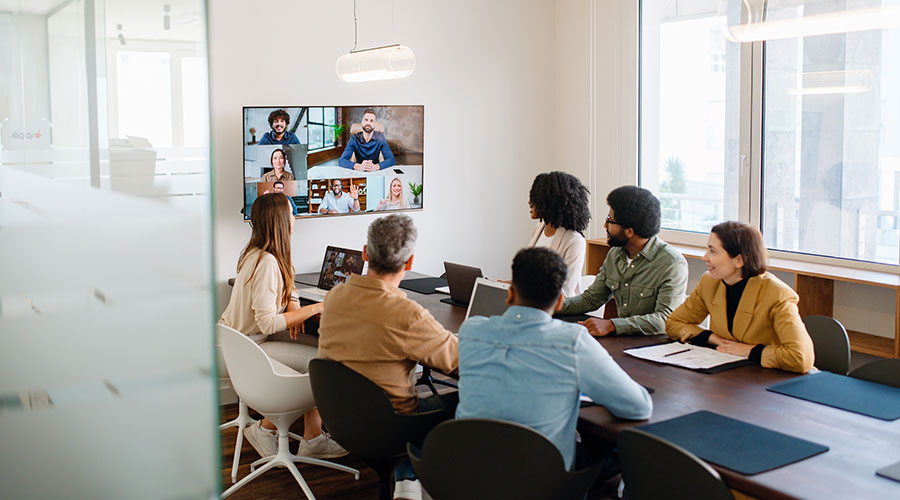
“The reality is that even when people are in the office, they are constantly on video calls,” explains Schrader. “In the past, collaboration meant people physically gathering in a conference room. Now, it often means one person at a workstation on a Teams or Zoom call.”
Most offices weren’t built for that way of working, instead featuring large open environments that Schrader says create serious acoustic problems when half the floor is talking all day.
“Clients who are paying attention are shifting their mix to fewer oversized boardrooms that sit empty most of the week, additionalsmall rooms for one person or groups of 3–8 people, plus team zones that don’t require huge open benching areas,” says Schrader. “The office must be able to handle heads-down work and video calls without everyone getting in each other’s way.”
Morrison says companies who have successfully navigated this new way of working have considered what the purpose of their office is and designed toward that.
“Purpose-driven offices or purpose-driven spaces really think about what task do I want to get done…and where is the space that I can do it?” she explains.
This again requires a shift away from individual assigned spaces or desks to more flex and social spaces.
“The office now is becoming, the hub, the connection point… It’s not just a workstation anymore,” says Morrison.
Schrader adds that, “People don’t work in one mode all day. They need choices that support quiet focus, private calls, small collaboration, casual touchdown space and places to reset.”
Workers want choice
Creating that flexible workspace requires organizations to first acknowledge that we are not going back to pre-pandemic workplaces—even if workers are coming back into the office.
“The companies I’ve seen transition into this well are the ones who look at it like that,” says Morrison. “The ones we’ve seen have such pushback, are the ones who kind of think, ‘We’ll just return and we’ll expect the same efficiencies and the same engagement that we had before.”
A big part of that is giving employees more choice to perform different types of work in different environments. Over the last few works of remote work, people have had more control over their environment at home to figure out how they can perform their best work.
If the building doesn’t compare or provide something better than their home office setup, Schrader says you’re already losing the battle on attendance, engagement and retention.
“People come back when they feel the office gives them options not easily replicated at home: advanced technology, quick interaction with co-workers and spaces that support different work modes without friction,” says Schrader.
This should look like not just an open sea of workstations, but additional workspaces like phone booths, huddle rooms and quiet spaces. Schrader says facility managers can shape this experience by reducing daily annoyances and distractions. If focus rooms are always booked or hard to find, you’ve already lost a huge group of workers. People need to be able to reliably find a quiet spot or social area without it turning into a distraction for everyone else.
For example, a room booking system that works, AV that connects quickly and consistent setups across rooms go along way.
“The smaller the friction, the more likely people are to choose the office,” says Schrader.
Intuitive design through wayfinding and graphics can also help people orient themselves and easily navigate workspaces without causing stress.
“As people come back—because in a lot of cases, it’s a hybrid schedule; they’re not there every day—a sense of familiarity is lost,” says Swanner. “You want people to feel a sense of ownership in their space, and it takes a lot of work to help people have that sense of ownership and familiarity.”
According to Morrison, what having more choices comes down to is the fact that people want more control over their work environment.
“The hospitality industry has been getting it right for years, thinking placemaking and designing environments for people that are branded,” says Morrison. “We need to continue stealing from that about making places comfortable and hospitality inspired. It’s all about how can they make a traveler more comfortable, and that’s the same with workplace.”
Things like good air, good light, ergonomics, reliable technology have to make a commute into the office worth the effort.
“If the air feels stale, the lighting is harsh and the acoustics are a mess, people will do the math and go back home,” says Schrader. “Comfort isn’t a nice to have anymore; it’s part of whether the building supports productivity.”
He adds that the best offices now, borrow the best parts of home and then add what home can’t do. Biophilic design or bringing the outdoors in is a good example.
“People got used to having plants, daylight and some connection to the outdoors while working from home,” says Schrader. “Those things matter more than people used to admit, and they impact how satisfied and productive people feel.”
While bringing plants into the office is easy, creatingreal access to the exteriorthrough terraces, courtyards or operable window is much harder—though necessary Schrader says if organizations are serious about making the office a place people choose.
Measurable results
Implementing effective workplace design and strategies takes time and a realization that you might not get it right the first time. Pilot programs that treat certain parts of the office as beta test zones can help organization see what works.
“The best advice I would give facility managers is to try new things and see what works because no two companies are the same; two workers are the same,” say Swanner. “[It’s] really important to stay flexible.”
Data tracking software also offers real measurable results through live dashboards that can look at things like the number of Bluetooth devices in the office at one time. Facility measures can use this information to manage peak or low times and adjust utility needs, maintenance and space utilization more effectively.
“Anytime that you can as a facilities person can anticipate any of those friction points, anticipate any of those issues people are going to have, and then already be remedying them, so they don’t even become something that’s top of mind, that draws people’s attention away from what their actual work is,” says Morrison.
By Amy Wunderlin, Contributing Writer
Amy Wunderlin is a freelance writer based in Fort Atkinson, Wisconsin.
Related Topics:
The post "How Facility Managers Can Rethink Post-Pandemic Offices" appeared first on Building Operating & Management