

Innovators Must Clear Roadblocks to Launch Extraterrestrial Base Programs
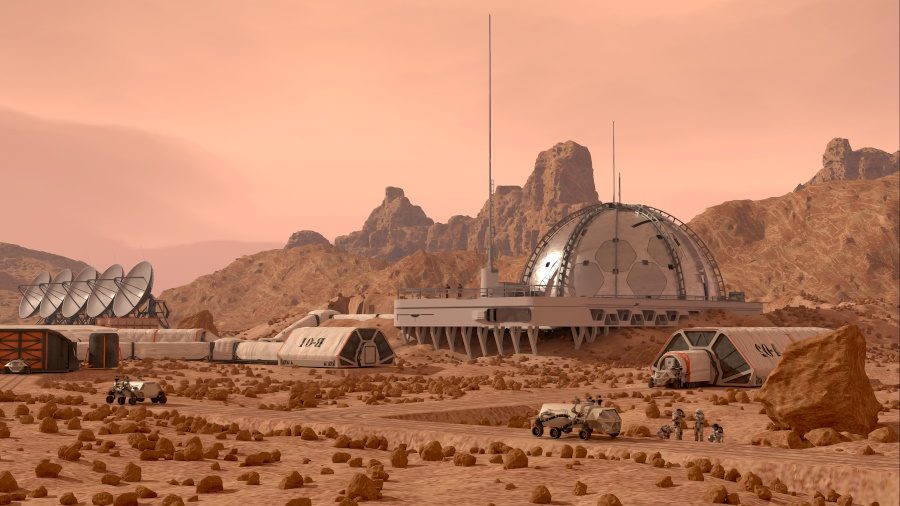
For many years, breakthroughs have focused on improving life on Earth through better products, more intelligent systems, and faster processes, but as technology accelerates rapidly and ambitions extend beyond our earthly confines, the question is no longer if we can successfully innovate outside of the planet, but how. It is, therefore, critical to consider what roadblocks must be cleared by innovators to develop and implement successful technologies intended to be used in extraterrestrial environments as we all brace ourselves for what lies ahead.
The path to such developments is paved with both groundbreaking technologies and improvements to existing innovations. To fully realize a future with long-term settlements beyond Earth, we must reassess many aspects of our lives—from improved transportation systems and infrastructure to the all-important “creature comforts” we may be capable of implementing in extraterrestrial settlements. While many innovations in space development are still in their infancy, innovative companies are already racing to establish footprints in fields that, in the not-so-distant past, would have seemed better suited for an enthralling science-fiction movie.
Space-based research to develop medical breakthroughs continues, and new industries, such as asteroid mining and material extraction, are on the horizon. This means innovators are currently tackling extraordinary challenges, including effectively planning and conducting experiments, transmitting data and other findings, remotely operating machinery, and safely transporting specimens back to Earth, among others.
These tasks are all considerable undertakings, but they are laying the foundation for a thriving extraterrestrial economy and sustainable space innovation.
Day-to-Day Life Considerations for Early Explorers
So, what happens when we develop settlements on the moon or elsewhere in outer space? Those first explorers will likely face many challenges that won’t be realized until they begin to establish their desired outposts. But we can already predict that the day-to-day creature comforts we enjoy on Earth won’t be possible in outer space, at least not precisely as we know them today.
Daily hygiene and healthy practices, such as brushing our teeth, preparing food, absorbing adequate nutrition, getting exercise, taking medicine, and sleeping soundly without interruption, may all need to be adjusted in an extraterrestrial environment. While many of these things are so routine to our lives that we may take for granted how easy it is to actually do them, that will likely not be the case when people are outside their comfort zones.
Creative manufacturers are already considering these needs and how to deliver them to outer space residents and visitors. Products will have to be adjusted for life outside the Earth’s atmosphere, but packaging and delivery mechanisms for our go-to products will also have to adapt.
Applying toothpaste to a toothbrush will present challenges in a limited gravity environment. Closed systems must be created to ensure things are generally easy for the human population.
Astronauts routinely face these types of issues (as we saw with the malfunctioning Artemis II zero-gravity toilet), and some workarounds have already been designed for them, but we will need large-scale systems that work for the general population.
Let’s be honest, the effort must be easy—humans enjoying modern technologies and life in outer space won’t want to suddenly employ a five-step process to get their toothpaste on a toothbrush!
Innovation Challenges
Manufacturers face unique challenges when designing and developing systems and products for use in space and for those destined for manufacture there.
Key questions arise: How do we extract and process materials capable of serving as structural components in space? Would importing raw materials from Earth prove more efficient, or should we build manufacturing platforms in extraterrestrial environments? Could prefabricated structures be delivered and assembled in space, and if so, how do we ensure their structural integrity in a microgravity environment? And perhaps most importantly, how do we keep everything firmly in place when gravity is no longer a constant? Solving these challenges requires rethinking traditional manufacturing processes and pushing the limits of engineering innovation.
Innovative manufacturers are concerned not only with the actual development of their products but also with adequately testing them here on Earth to ensure they work as they should in different environments. How can we effectively test for performance and efficacy in micro and zero-gravity environments? Methods to ensure the stability of these intended products and processes are in development.
Efficient travel to these locations will present a further set of unique challenges. Given the significant distances to these settlements (along with the potential need for return travel), more robust propulsion systems must be developed. Some companies are building and developing rockets to make space transportation more efficient and less expensive, but we will also require vehicles that can safely and efficiently transfer large and heavy payloads.
Intellectual Property’s Role in Innovation
Of course, when an inventor develops something here on Earth, it can apply for and obtain patent protection, which gives it the right to prevent others from making, using, or selling the claimed invention. Part of the reasoning and motivation behind this award of the right to exclude others is encouraging and fostering further innovation by allowing the public to access the innovations detailed in the patent.
In the outer space construct, companies that aim to innovate in these extraterrestrial environments should and likely will receive patent protection to prevent others from making, using, or selling their patented invention. This will, in turn, encourage innovation and encourage companies to get their flag in the ground early and try to stake their claim to various products, systems, and manufacturing methods.
However, the law hasn’t exactly caught up yet. Many legal unknowns exist regarding how extraterrestrial patent protection will play out, and there are even more questions about how it may be enforced in outer space.
Truly innovative companies—including household brand names you know and love–aren’t waiting for those answers. Evidenced by their patent filings with the U.S. Patent and Trademark Office, we know that they are already innovating with the expectation of some intellectual property protection, whether here on Earth or in space.
The new space race is here, and it’s already quite competitive. While the general public may not yet see the complete picture, companies are already positioning themselves for control of groundbreaking technologies in this uncharted environment. Those who dare to innovate boldly, tackle unanswered questions, and invest early will reap significant long-term rewards–from intellectual property protection and market dominance to reputational impact and public trust. Being seen as a pioneer in space manufacturing isn’t just about technological success; it’s about securing your place as a leader for generations to come. The future of space belongs to those who dare to act now, so buckle up, leap, and prepare to lead the way.
Jonathan C. Hughley is a partner, patent attorney, and Industrial & Mechanical Technologies Practice chair at the Chicago-based intellectual property law firm Marshall Gerstein. He helps manufacturers and other innovators from various technological sectors to protect their intellectual property. He may be reached at [email protected].
The post "Innovators Must Clear Roadblocks to Launch Extraterrestrial Base Programs" appeared first on Consulting-Specifying Engineer