

Judge Rejects Contractor Challenge to Hudson Tunnel Project Procurement
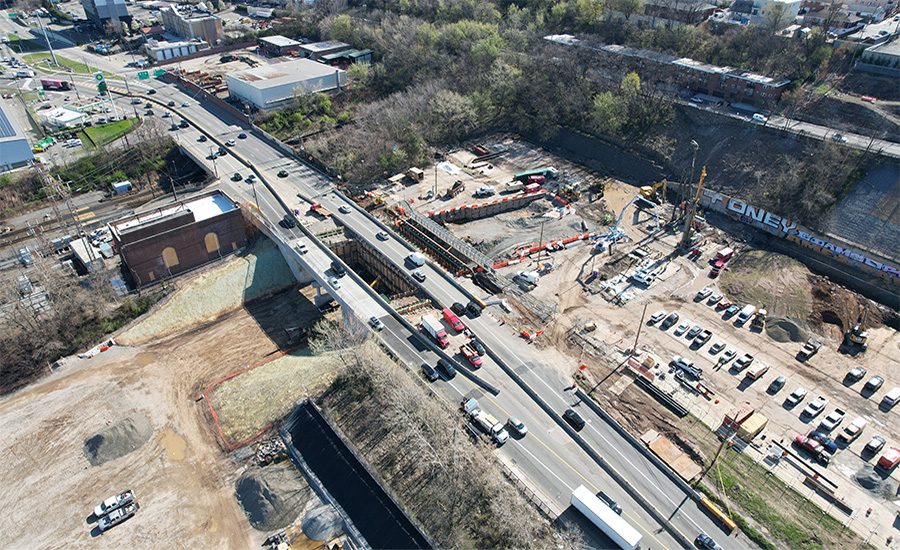
A federal judge on Dec. 11 denied George Harms Construction Co.’s request to stop bidding on the Hudson River tunnel project’s New Jersey surface alignment package, finding no irreparable harm from the Gateway Development Commission’s project labor agreement while the lawsuit continues.
In the 11-page opinion reviewed by ENR, the U.S. District Court in Newark, N.J., wrote that Harms “has not demonstrated that the [agreement] prevents it from bidding,” citing the pact’s terms and the commission’s repeated assurances.
The decision keeps the commission’s procurement schedule intact for one of the estimated $16-billion megaproject’s largest design-build contracts.
The ruling is a setback for Harms, which filed suit Nov. 26, alleging that the union labor agreement unlawfully excludes its United Steelworkers-represented workforce and violates state labor directives, procurement rules and federal antitrust and constitutional provisions.
The court noted that denial of a temporary restraining order does not resolve those underlying claims, which will proceed.
Court Finds Limited Merit in One Claim
Harms contended that the agreement—signed by the Hudson County Building and Construction Trades Council and its affiliated unions—effectively blocks the firm from bidding unless the Steelworkers are added as signatories.
The judge disagreed, writing that the agreement “permits any otherwise qualified bidder to compete” and emphasizing that Harms had been told it could submit a proposal.
The opinion cites the New Jersey Supreme Court’s 2024 decision in Delaware River Joint Toll Bridge Commission v. Harms, which upheld a project labot agreement challenged by the same contractor. That precedent “substantially undermines Harms’s claims” regarding Gateway authority to adopt the agreement, the judge wrote.
The ruling found Harms “likely to succeed” in the case, only on a narrow First Amendment claim alleging compelled speech through mandatory fringe-benefit contributions.
RELATED
Bid Protests Offer a Way Around PLAs, But Will a Slow, Steady Precedent Win the Day?
Still, the court concluded the argument did not justify emergency relief. The judge said Harms failed to show a chilling effect or any other form of immediate, non-compensable injury.
The court also cited evidence that Gateway indicated it would facilitate discussions between Harms and the building trades, and wrote that Harms “did not meaningfully engage in that process,” which weakened its claim that bidding was impossible.
The judge further rejected Harms’s argument that Gateway’s delayed ruling on its Oct. 29 bid protest rendered administrative relief futile, writing that the commission “has been responsive” and had not foreclosed a decision.
With the restraining order denied, Gateway may continue to evaluate proposals and advance to award on the surface alignment contract, which includes trackway, civil structures, bridges, utility reconstruction and a wetlands viaduct between Secaucus and North Bergen, N.J.
The case now proceeds to briefing on Harms’ remaining claims involving antitrust, equal protection, due process and the First Amendment.
The commission “is pleased with the district court’s decision today denying the plaintiff’s motion,” said Molly Beckhardt, its senior communications associate. “We continue the process for awarding the contract for this critical component of the Hudson Tunnel Project.”
Harms’ counsel emphasized the court’s treatment of the First Amendment claim. “We are pleased that the court agreed that the labor agreement adopted by the Gateway Development Commission would likely violate the First Amendment by forcing the workforce of George Harms Construction to make benefits payments to the handpicked unions in line to profit from this sweetheart deal,” said Kevin J. Coakley, a partner at Connell Foley and counsel for Harms, by email Dec. 12.
“We are considering our next steps, including an appeal to prevent this process from moving forward under the shadow of a clearly unlawful agreement,” Coakley added.
The United Steelworkers has not yet responded to ENR’s request for comment. The court has not scheduled hearings on Harms’s request for a preliminary injunction.
The post "Judge Rejects Contractor Challenge to Hudson Tunnel Project Procurement" appeared first on Consulting-Specifying Engineer