

Leveraging Automated Controls For Optimal Lighting
Whether a facility manager’s next project is new construction, a major renovation, or an energy retrofit, today’s commercial clients want solutions that improve the occupant experience, lower operating and energy costs, and enhance building performance. To accommodate these needs, the right lighting, shading, and control systems can simplify facility management while adding demonstrated value for tenants and occupants.
Wireless Makes Change Easier Day-To-Day And Over Time
It’s no secret: commercial buildings change frequently. Spaces are redesigned and evolve to serve an increasingly agile workforce. Investing in wireless solutions for new construction or upgrading to wireless in existing buildings makes the space more adaptable and able to meet everyday challenges and long-term building needs. A wireless system also makes it easier to design with various lighting types—from tunable white to full-spectrum control and static white, ensuring you can optimize control in key areas without compromising the budget in spaces where static white control is sufficient.
Traditional lighting systems lock you into fixed zones that can only be reconfigured by rewiring. When tenants inevitably reorganize their space or convert a conference room into a collaborative workspace, facility executives have a choice to make: live with suboptimal lighting or pay for rewiring. With a wireless system, fixture assignments can be reconfigured in minutes with a familiar app when you need to expand open office areas or create a new huddle room.
Luminaire-level lighting control, or LLLCs, takes this flexibility further. Each fixture becomes a zone that can be grouped and regrouped in any combination and reassigned whenever necessary, even temporarily, for events.
Automated Daylight Control Reduces Glare And Eyestrain
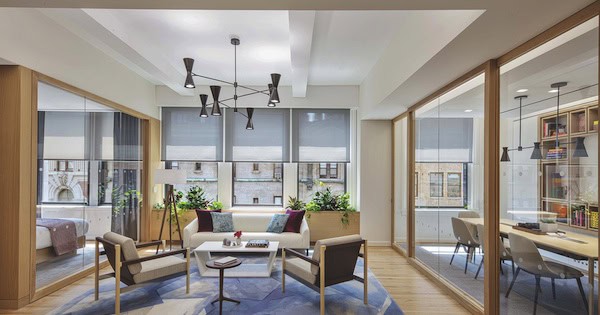
Daylight is one of the most highly coveted amenities in office buildings, but glare from windows is also one of the most persistent employee concerns. Manual shades were the standard in most commercial spaces for years, but they rarely work as a practical approach to daylight control. Manual shades are frequently only lowered once or closed completely to mitigate glare and seldom opened again to take advantage of daylight and views, rendering them ineffective and creating a haphazard aesthetic, particularly from the exterior of the building.
Automated shades, paired with daylight sensors, can use solar positioning algorithms to harvest as much daylight as possible while preventing disruptive workplace glare. In best-case scenarios, shade and lighting control systems integrate seamlessly to ensure that when daylight is sufficient, electric lights are dimmed or even turned off to save energy and boost sustainability. According to Market Research Future, the automated shading system market is expected to grow from $20.59 billion in 2024 to $41.66 billion by 2032, driven partly by building owners who recognize that effective daylight management represents both an operational necessity and a strategic advantage.
Energy savings make the business case even more compelling. Daylight harvesting can reduce lighting energy consumption by 30-60%, dimming electric lights when natural light is sufficient. Wireless daylight sensors install without control wiring, making sophisticated daylight control practical even for retrofit projects that couldn’t justify the cost and disruption of traditional wired systems.
This transformation is showcased in BlackRock’s Manhattan headquarters, where the global investment firm consolidated 4,000 employees from three separate offices into a single, one-million-square-foot space. “Bringing in daylight and allowing that daylight to penetrate all the way deep into the floors so that everyone has access to natural light was very important,” explains Barry Novick, Technology Strategy at BlackRock. The company’s approach, which they call “democratizing daylight,” ensures that whether employees have window seats or work in interior spaces, everyone benefits from natural light that feels authentic throughout the day.
Dynamic Lighting Systems Support Wellness
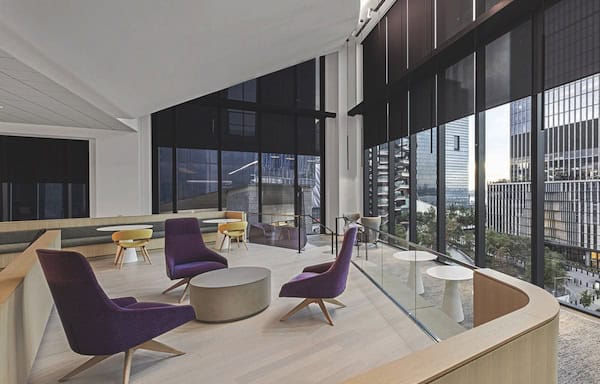
Dynamic lighting can adjust color temperatures to suit the rhythm of the day with cool, energizing light early in the day and warm, relaxing tones in the evening. Combining innovative building technology and green-building certifications is a powerful differentiator in a competitive real estate market.
In particular, the WELL Building Standard has seen explosive growth in recent years. Since the launch of WELL in 2014, thousands of companies, including more than 20% of the Fortune 500, have adopted WELL as an evidence-based roadmap for applying health strategies. Achieving WELL certification almost always requires robust lighting and shading systems.
The impact of effective, integrated light control is significant. In studies, workers report less eye strain, fewer headaches, and reduced afternoon fatigue in spaces with optimized lighting. Higher job satisfaction translates to lower turnover rates and reduced recruitment costs.
For facility managers, the challenge is no longer whether to implement innovative, sustainable lighting and shading technologies, but how to use integrated systems that deliver measurable performance improvements with the power to adapt over time. Over time, cloud-connected systems can learn from usage patterns and provide information that allows the facility manager to optimize lighting and shade schedules based on actual occupant data rather than assumptions about where and how people move during the day.
The Benefits Of System Automation
Traditional lighting control systems require dedicated control wiring, large electrical panels, and weeks of programming. Wireless systems eliminate these complications, leading to faster installation and lower labor costs. In new construction or major renovation, wireless solutions can help reduce the space needed for electrical closets and expand usable real estate. In retrofits, wireless infrastructure often supports upgrades without significant disruption to the space.
Investing in automated systems eases day-to-day demands on the facilities team while providing a better experience for end users—less time spent fielding unplanned maintenance calls equals a more efficient operations landscape. Fewer wires mean fewer failure points and faster troubleshooting when problems occur. When a service issue arises, remote, app-based diagnostics and programming give the facility manager greater flexibility to address the situation from anywhere, and at any time, including the ability to identify and address issues before they affect building occupants—another boon for productivity.
At the fixture level, wireless lighting can be reconfigured or adjusted easily, and cloud-connected software updates happen via the cloud to keep the system up to date and allow it to get smarter and more capable over the life of your building.
As workplace expectations evolve, your facilities team will look for every advantage to keep the building running smoothly and efficiently. Wireless lighting systems can help your building adapt easily to changing technology and an evolving workforce—a win-win for building owners, occupants, employees, and the facilities team dedicated to keeping them all happy.
By Chris Udall
From the December 2025 Issue

Udall is a Coopersburg, PA–based Product Management Director for Commercial Business at Lutron Electronics. He has served in various engineering and product management roles. Udall enjoys researching emerging technologies and identifying ways to improve customer experience.
Do you have a comment? Share your thoughts in an e-mail to the Editor at [email protected].