

Northwest Legacy Award Winner David Baska: How to Stand Firm on Shaky Ground
Geotechnical engineering wasn’t on David Baska’s mind when he graduated from the Colorado School of Mines in 1984 as a geological engineer, but a series of fortuitous events conspired to change that. A move to Seattle—a seismic hotbed—a master’s degree from University of California, Berkeley under Harry Seed and a doctorate at the University of Washington allowed Baska, now 40-plus years into his geotechnical engineering career, to bridge the gap between research theory and engineering innovation.
“Working with Dr. David Baska has been a master class in technical excellence and professional integrity,” says David Swanson, a data center engineer at Microsoft. “His deep geotechnical and earthquake engineering expertise, collaborative approach and thoughtful style have consistently elevated research and project outcomes, design team dynamics and, of course, our civil engineering professions. David’s ability to blend innovation with practical insights makes him an invaluable contributor to our industry.”
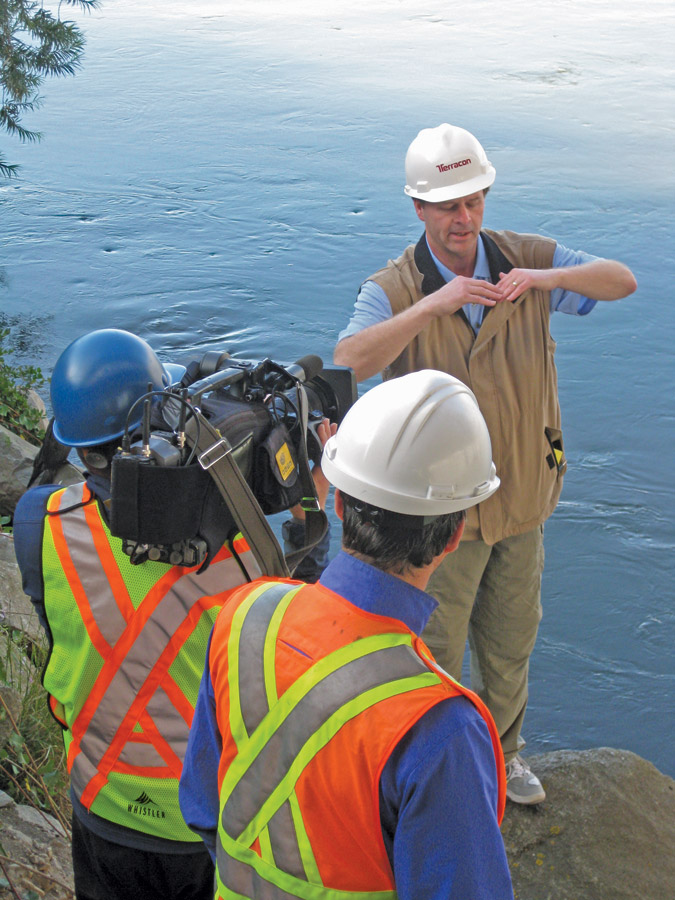
Baska insists he’s simply doing what he can to continually learn about geotechnical practices. He says he can’t remember the last time he read a book for leisure; instead, his time is spent focused on soaking up the latest research in ground motions and ground failure. “I do enjoy the technical works,” he jokes. “I wouldn’t say I am really good with innovation. I take other people’s ideas and put them into practice. I lean a lot on the smart ones and try to think of ways to apply their good efforts to the construction and design industry.”
He’s found quite a few ways to make those applications work in the real world.
Baska’s expertise spans seismic hazard and liquefaction analyses, soil-structure interaction and resilient structural design. Baska co-authored the NRCS Seismic Analysis Manual for Dams, writing most of its chapters. His diverse project portfolio includes bridge design in the New Madrid Seismic Zone, seismic retrofits in Oregon and Vermont and service on Seattle’s SR-99 Alaskan Way Viaduct Expert Panel. He has also applied performance-based design to high-rises such as Seattle’s 121 Boren and Las Vegas’ World Jewelry Center as well as essential facilities like hospitals and emergency centers. His post-earthquake reconnaissance in Chile and New Zealand advanced seismic engineering practices worldwide.

“His reputation is supported by his broad understanding of the current industry practice and also his practical approach to evaluating seismic impacts and risks to our projects,” says Jonathan Menke, principal engineer on the geotechnical civil SME team for Eastern Region Nextera Energy.
What started in Colorado, where Baska grew up and then attended university, translated into a career largely based in the Pacific Northwest. He moved to Seattle—he was following a girl who eventually became his wife—after attending the Colorado School of Mines and except for a nine-month stint at Berkeley has been there ever since.
After his undergraduate work, he was an associate engineer at Haley & Aldrich before becoming president of Cascadia Earthquake Consultants in 1997. In 2001, he moved to Terracon and is vice president and senior principal, celebrating 25 years there this year. It was those early days in the field where he says he learned the environmental side that prompted him to earn his master’s degree in geotechnical engineering based simply on the fact that he enjoyed the topic.
“My specialty since 1991 has been geotechnical earthquake engineering, and my time at Berkeley certainly planted the seed,” he says. “Being in the presence of Harry [Seed] and other faculty at Berkeley was inspiring.” Following an Earthquake Engineering Research Institute annual meeting in Seattle that he attended in 1991, he “decided to focus on earthquake engineering.”
He developed a business plan as an independent consultant and says he still applies that plan at his work with Terracon. Baska says he was fortunate that earthquake research was a key interest in the industry during his career, allowing him to focus on a specific area for so long. Along the way, though, he’s carved a reputation as one of the sharpest minds in the field.
“I make a point of staying on top of current trends in construction and engineering, and I try to apply a bit of a crystal ball of where I think the profession is going and how we can fit within that need,” he says. “A key thing for me—I refer to [it] as technology transfer—is I enjoy educating my fellow engineers, clients and students in terms of taking research being done at universities and applying it in the real world.”
Baska has also made a point of being dependable. “I’ve always held important that I do what I say I’m going to do,” he says. “If I say I will have something done at a time, I do everything I can to hold that commitment.” Baska still finds a balance, breaking his time into a mixture of career, exercise and family.
“Dave is an exceptional leader whose blend of technical excellence and collaborative mindset consistently elevates our team and the broader engineering community,” says Jared Mechetti, director of national accounts at Terracon. “He delivers clear, actionable solutions to complex geotechnical and seismic challenges with precision and professionalism. His responsiveness and commitment foster a culture of trust, making him a go-to resource and respected mentor.”
He’s certainly had the opportunity to showcase those skills as an affiliate associate professor at the University of Washington since 2007. He teaches one class per year, originally a foundation design class for undergraduates and later a professional practices class to prepare students for the real world. Now he’s in his second year of teaching geotechnical graduate engineering students, a class in line with the message that he wants to share, “specifically for what it is like to be a consultant and prepare them for the business side of what we do.”
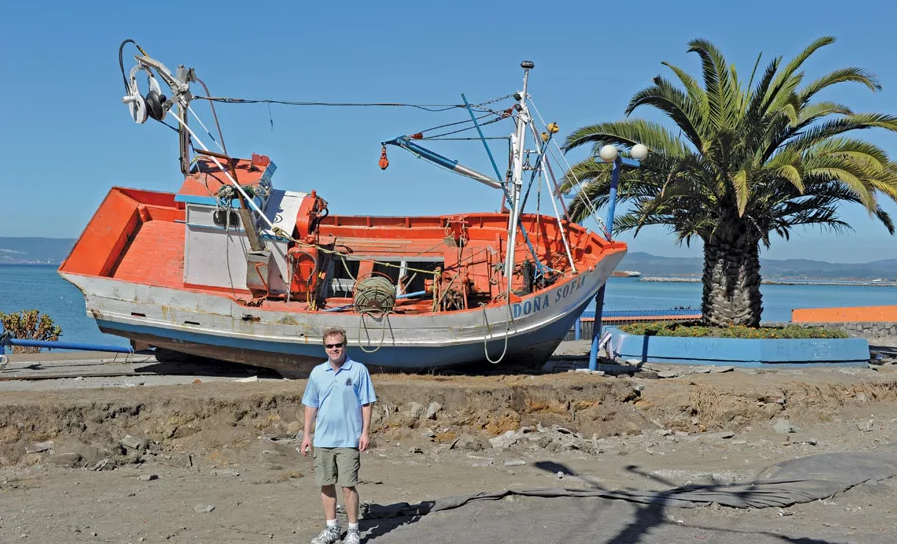
As part of his continuing research, Baska visited southern Chile in 2010 following an earthquake at a large subduction zone, learning about the parallels to possible events in the Pacific Northwest. He followed that up with a reconnaissance trip in New Zealand in 2011 to investigate soil liquefaction and damage due to saturated soils. He ended up teaching in Canterbury for a couple of months about the Christchurch earthquake.
It’s that constant learning that has him now focused on two main things in the geotechnical world: ground motions and soil liquefaction. He’s studying how ground motions influence performance-based engineering, which is one of the areas he’s most involved in now, with a focus on high-rise buildings in seismic regions, data centers, emergency operations centers and hospitals. He’s also looking at ground failure and soil liquefaction and how soil failures impact a building’s usability. He says machine learning and AI are helping inform knowledge on past events and predict future possibilities.
With so many projects under his belt across the world, the one that he still says is most meaningful is the recent completion of Seattle’s Alaskan Way Viaduct and waterfront overhaul. Roughly 25 years ago, Baska was named to a state task force to evaluate the options of replacement or repair on the viaduct through downtown Seattle, one of two geotechnical engineers involved. The resulting project replaced the viaduct with a tunnel while opening the waterfront of Seattle to the public.
“Now when I go down to that waterfront area, because it was formally completed this last year, to think back 25 years ago, I had a hand in that,” he says. “As an engineer, when I see my works around the city, seeing things I have been involved in in the past, there is pride involved. The Seattle waterfront opening up, this is quite rewarding.”
The post "Northwest Legacy Award Winner David Baska: How to Stand Firm on Shaky Ground" appeared first on Consulting-Specifying Engineer