

The Opening Act: Thoughtful Venue Entry Design Boosts Flow, Safety, Guest Comfort
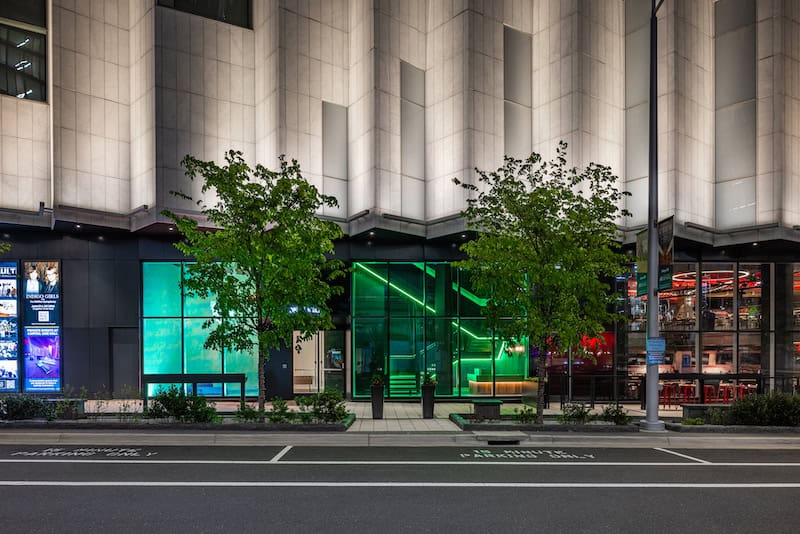
Before stepping into a venue, whether it’s a performance hall, conference space, or black box theater, visitors are forming opinions. A well-designed entry is key to preparing them for what lies ahead. The arrival sequence provides the first impression of a space, setting the stage for both the experience itself and the visual identity of the built environment. Every entry, regardless of size, plays a significant role in directing guests through sensory cues, innovative wayfinding, and aesthetics that contribute to the theme of a venue.
That approach guided the creation of a distinct entry for The Vault at Capital One Center in Northern Virginia, where underused retail space was reimagined to welcome guests to the state-of-the-art 300-capacity theater for performing arts. By layering material depth, reflective surfaces, and color-changing light, the design captures a sense of drama, creating an experience that is both intimate and theatrical—embodying the overall design experience.

Wayfinding By Design
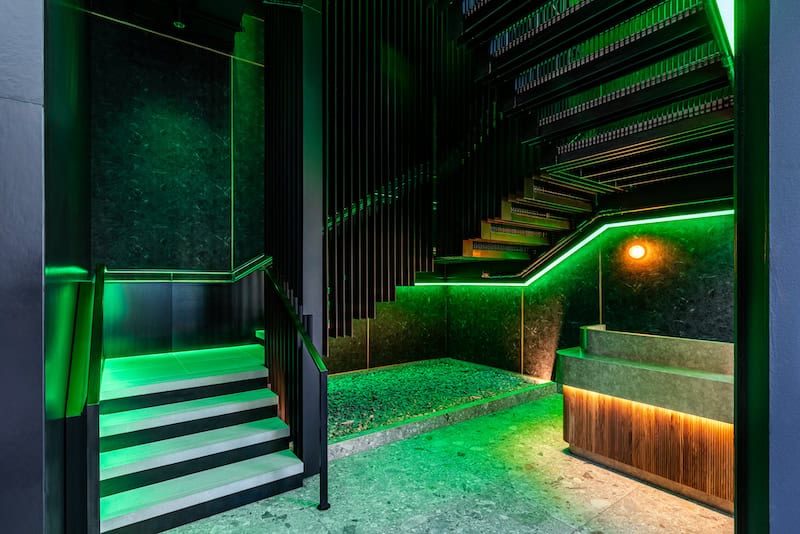
The most successful arrival experiences feel intuitive, even to first-time visitors who are unfamiliar with the space. Guests should be able to move confidently through a venue, guided by clear circulation and following a line of sight, noticing how a pathway opens or subconsciously tracking a shift in lighting. For example, openings that glow or brighten can signal a next step in an arrival sequence, while changes in texture can guide a turn or transition without requiring signage. Architectural elements reinforce this intuitive navigation, such as a stair that is anchored visually through form, light, or materiality, that naturally draws attention, encouraging patrons to move upwards.
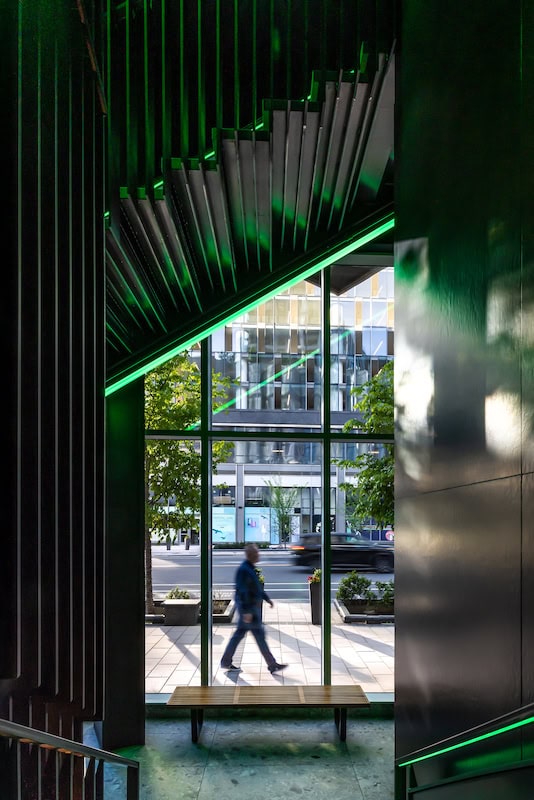
In the case of The Vault, a suspended stair supported by vertical metal fins provides both structure and wayfinding. Its floating presence almost acts as a magnet, leading guests to upper floors. Light reflecting off the fins reinforces that movement, helping guests understand where they’re headed before they have time to think about it.
Illuminating The Journey
Further leaning on guest intuition, light is one of the first things perceived in a space; too little or too much light shapes the experience in different ways. Strategically-placed lighting and fixtures can highlight textures, form, and establish movement throughout the space. Color-shifting or layered illumination turns even simple surfaces like wall paneling into active elements in the guest journey. By integrating programmable and subtle effects, designers can choreograph how light unfolds across the space, making the arrival feel deliberate.
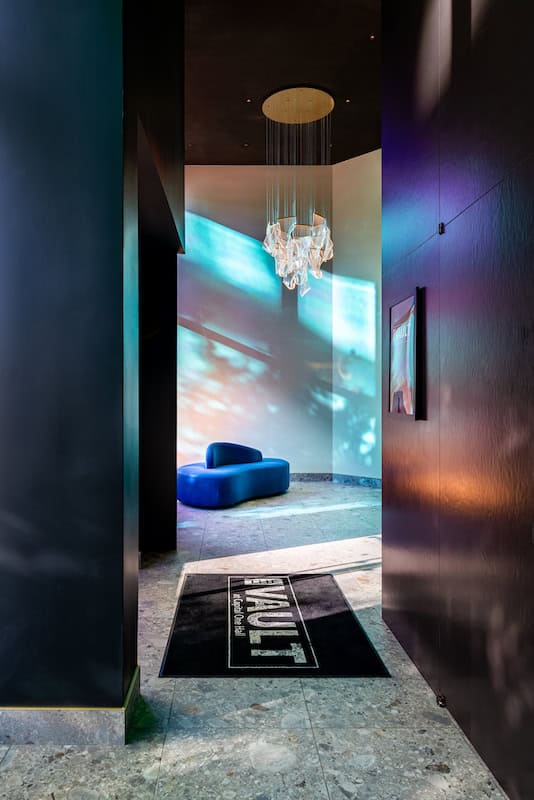
In projects like The Vault, color and reflection animate the environment, creating a visual narrative that carries visitors from one area to the next while cementing the space’s identity. The project developed an approach called “light painting”; incorporating dark tones inspired by the black box theater while leveraging color changing lighting as a wayfinding tool to guide guests all the way through to the theater. This leveraged light to illuminate different textures on the walls, ceiling, and stairs that serve as guidance for patrons walking the space—creating a satisfying rhythm from one end of the lobby to the next. In this case, lighting becomes functional and expressive, contributing to a sensory experience that defines the atmosphere, elevates materiality, and gives the entry sequence its own distinct character.
The Arrival In Full Force
Most guests see arrival as just a hallway or holding area, but when movement, lighting, and material choices interplay, it becomes much more than that—it becomes an experience that sets expectations. Guests may not notice each design choice, but they feel its impact, establishing entries as an opening act rather than a room to pass through.
These transitions create lasting impressions. Every shift in texture, gentle change in color temperature, or sculptural moment in circulation elevates the experience, enticing guests to return. By focusing not only on how entry points orient visitors with ease, but also on cultivating identity from the start, venues can build excitement for their audiences from the outside in. Whether the event ahead is loud and high-energy or quieter and intimate, arrival marks the start of the journey, and intentional design makes that first moment unforgettable.

By Adriana Urbistondo
Adriana Urbistondo is an Innovator and Architectural Designer at //3877, a boutique design firm focused on high-end residential, multi-family, restaurant, and hospitality projects.