

As Americans Spend More Time Indoors, Air Quality Is Becoming a Building Essential
As buildings seal up for colder months and occupants spend more time indoors, indoor air quality (IAQ) is becoming harder to ignore. What was once treated as a background mechanical function is now shaping comfort, complaints, and confidence in shared spaces.
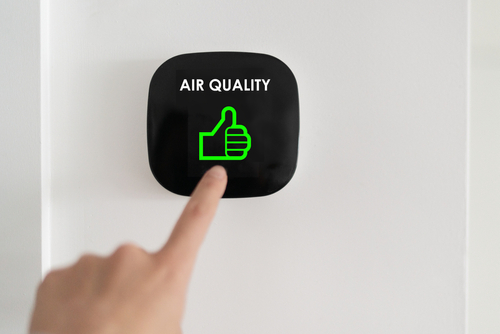
For facilities managers, this shift presents a growing challenge. People are making decisions about where to work, shop, learn, and gather based on what the air feels like, often without access to technical data. A musty odor or a stuffy room can quickly raise doubts about how a building is being operated. IAQ has become an operational issue with real implications for tenant satisfaction and public trust.
Why Indoor Air Is Under New Scrutiny
Awareness around IAQ has increased steadily over the past several years. The COVID-19 pandemic reshaped how people think about shared indoor environments, and ongoing pollution and environmental concerns have reinforced the idea that indoor air cannot be taken for granted.
The 2025 GPS Air Indoor Air Quality Perception Report found that 66% of Americans say they are more cautious about indoor air than they were before the pandemic. Nearly 70% say recent events such as pollution and disease outbreaks have made them more mindful of what they breathe indoors. This heightened awareness has become part of everyday decision-making rather than a temporary response.
Trust erodes quickly once people leave their homes. More than half of respondents say they trust the air in their own homes more than in public or commercial spaces such as offices, gyms, and stores. Only 9% believe public spaces have better air systems. For facilities teams, this represents a clear perception gap. Occupants care deeply about air quality, yet rarely see evidence that it is being actively managed.
What Occupants Notice First
When people judge indoor air quality, they rarely start with ventilation rates or system specifications. Sensory cues shape first impressions. Smell, comfort, and freshness become stand-ins for air quality performance.
According to the survey, unpleasant odors are the strongest red flag across public environments. Forty-one percent of respondents say they would avoid returning to a gym, store, or office if the air smelled unpleasant. That response outweighs concern about known virus exposure. Nearly half say they are most likely to think about IAQ when the air smells strange or stale.
Facilities managers see the result of these perceptions in complaint logs and service calls. Odor concerns often surface before any measurable issue is identified. Even when systems are operating within design parameters, the lack of visible reassurance can leave occupants unconvinced.
Misconceptions further complicate the picture. More than half of respondents believe indoor plants significantly improve air quality, despite limited real-world impact. This highlights a broader challenge for facilities teams. Complex systems operate out of sight, while simple visual cues carry disproportionate influence.
Public Spaces Under Pressure
Skepticism is highest in high-traffic environments. Hospitals, airports, retail spaces, gyms, and schools rank among the locations where respondents express the most concern about air quality. These spaces also face the greatest operational constraints, including aging infrastructure, tight budgets, and continuous occupancy.
Perception of effort matters. Nearly 40% of respondents believe most businesses are doing only the minimum required by law to maintain IAQ. Just 24% think businesses actively filter and monitor the air. Another 12% believe no action is taken unless someone complains.
For facilities managers, this reinforces a familiar reality. Good work often goes unnoticed when it stays behind the scenes. When air quality strategies are invisible, occupants assume neglect, even when systems are functioning as intended.
Retail environments face particular vulnerability. Small boutiques and big-box stores are widely perceived as paying the least attention to air quality, despite significant variation in system quality. These assumptions influence customer behavior regardless of technical performance.
Transparency as an Operational Tool
Survey results point to a clear opportunity: Visibility builds trust.
Sixty-one percent of respondents say they would trust a building more if they knew IAQ was actively monitored. Nearly two-thirds support public air quality scores similar to restaurant health ratings. Expectations rise even higher for schools and transportation hubs, where transparency is closely tied to safety concerns.
Air quality ratings also influence decision-making. Eighty percent of respondents say they would consider air quality scores when choosing travel or event venues. For facilities teams, this signals a shift. Monitoring and reporting are no longer just for teams working behind the scenes. They’re tools for managing expectations and reducing uncertainty.
What This Means for Facilities Management
IAQ now affects how occupants evaluate building performance day to day. More than half of respondents say cleaner, fresher-smelling air improves their focus and productivity. In workplaces, that connection links air quality to engagement and retention. In public spaces, it affects dwell time and repeat visits.
Facilities teams are in focus, as IAQ is moving from a background maintenance function to part of the occupant experience. Monitoring, communication, and documentation become as important as mechanical performance.
This shift arrives alongside other pressures, such as legacy HVAC systems, tight capital planning cycles, and staffing constraints. Balancing these realities requires prioritization rather than perfection.
From Invisible System to Visible Standard
Indoor air is moving toward baseline expectation, similar to clean water or reliable power. Occupants increasingly assume it will be safe and want proof when it is not obvious.
Facilities leaders who invest in measurable and communicable air quality position themselves to close the trust gap. That does not require exposing every technical detail. It does require acknowledging that confidence depends on visibility. Real-time monitoring, clear reporting, and simple explanations help occupants understand what is being done on their behalf.
The defining issue is accountability. As indoor air becomes a shared expectation, facilities teams that make it visible earn trust, while those that keep it hidden face growing skepticism. IAQ is no longer exempt from scrutiny, and facilities management sits at the center of that reality.
Audwin Cash is CEO of GPS Air, a provider of indoor air quality solutions. With prior roles at Regal Rexnord and Acuity Brands Lighting in energy-efficient building technologies, he now leads efforts to bring data-driven air cleaning and real-time monitoring systems to market. Cash holds a BS in computer engineering from Georgia Tech and an MBA from Lehigh University.
The post As Americans Spend More Time Indoors, Air Quality Is Becoming a Building Essential appeared first on Facilities Management Advisor.