


Data Center Construction Boom Reshapes How Top Electrical Contractors Manage Workloads
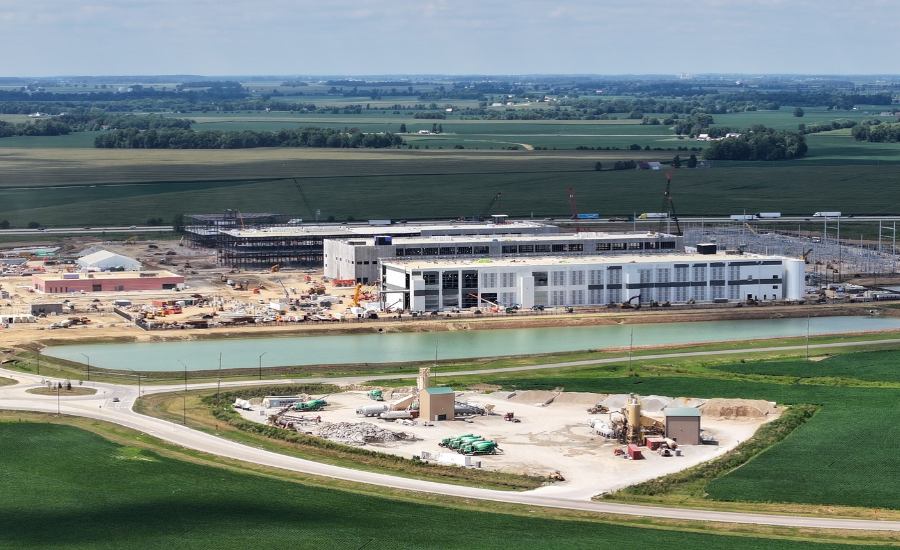
Data center hyperscalers Amazon, Alphabet, Meta, Microsoft, Apple and Oracle are projected to pour a combined $1.3 trillion into capital expenditures next year to build out artificial intelligence infrastructure, according to a recent forecast by S&P Global Ratings. Yet at the ground level, leading electrical firms among ENR’s Top 600 Specialty Contractors say the resource demands of hyperscaling can be a double-edged sword for business.
“The rapid growth of data center development continues to place a premium on Southland’s engineering expertise and execution certainty,” says Jim Meacham, CEO at Southland Industries, ranked No. 9 on ENR’s Top 600 list. Data centers are increasing demand for such expertise and certainty “now more than ever,” he says.
Overall, Top 600 firms clinched a 14.7% rise in listed revenue to $275.1 billion. Backed by data center spending, Top 600 firm revenue also increased 65% in the telecommunications sector, driving general contractors to place a greater premium on specialty trade partners that can deliver electrical expertise like Southland.
But beyond the numbers, Meacham says the data center boom has placed many electrical contractors on the frontlines of emerging construction trends reshaping the ways in which they invest in staff and systems to better manage their workloads.
“We expect modularization, and increasingly collaborative integrated project delivery approaches to continue reshaping the industry and our company over the next several years,” says Meacham. “Southland’s clients are looking for greater predictability, improved coordination and more efficient project delivery”—all of which can be improved upon with modularization, he explains.
Helix Electric COO Casey Long says prefabrication and industrialized construction are two of the most significant forces reshaping the way the firm runs its business today. The firm is ranked No. 41 on ENR’s Top 600 list.
“As project schedules compress and labor availability remains constrained, more owners and general contractors recognize that moving work off-site into a controlled manufacturing environment is not simply a cost strategy; it is also a quality and delivery strategy,” says Long. He adds Helix Electric invested in its prefabrication capabilities early on with a facility in Goodyear, Ariz., and the value of that facility becomes “more evident each year.”
Next, Long says the firm is gearing up for expansion into Alabama, announced this month.
“This new venture will include an approximately 1.2-million-sq-ft campus consisting of three buildings developed in phases, creating additional capacity to support off-site fabrication and industrialized construction at scale,” says Long. “That expanded capacity will also position us to support another trend with significant growth potential: the reshoring of domestic manufacturing.”
He adds, “As companies bring semiconductor fabrication, pharmaceutical production and advanced technology manufacturing back to the United States, the electrical infrastructure requirements for these facilities are substantial.”
Gaylor Electric CEO Chuck Goodrich says the firm, ranked No. 61, also continues to see growth in advanced manufacturing, industrial modernization and large-scale industrial facilities. “As facilities become more automated and connected, electrical systems continue to play a larger role in how those facilities operate,” he says.
Energizing Data Centers
Hunt Electric, ranked No. 44, was part of the first-ever hyperscale project built in Minnesota. The experience illustrated both the opportunity and the complexity involved in data center projects, says President Jeff Young.
“Obviously these aren’t projects where you show up with a crew; they require sophisticated pre-construction planning, specialized labor and the ability to coordinate across multiple contractors simultaneously,” says Young, adding that he believes the labor demand tied to mission-critical work in the region is uneven.
“In Minneapolis and St. Paul, we have adequate labor. When we travel to other parts of the country—and we work in 41 of the lower 48 states currently—the picture is different,” he says. “We’re paying premium rates, per diems and incentives to attract and retain workforce in those markets. That’s part of why our bidding approach has become more strategic. We’re pricing for the actual risk involved, not a standard margin.”
In addition to advanced manufacturing, data centers have brought energy conversations to the forefront across the country as well, notes Young.
“The nuclear conversation has re-emerged in a meaningful way, and we’re watching that closely. The permitting process will be complex, but it represents a significant opportunity for electrical contractors with the right expertise,” he says, adding that the buildout of renewables and grid modernization go hand-in-hand with conversations about nuclear energy.
“These aren’t new markets for Hunt Electric as we’ve been in renewables for more than 20 years, but the infrastructure demand tied to electrification is accelerating,” says Young. “Electricity is becoming the foundation of economic growth across nearly every sector, and that reality drives demand.”
As demand for reliable power continues to increase, Encore Electric President Andy Gordon says the firm is seeing substantial investment in the infrastructure needed to generate, store and deliver that power.
“We’ve invested in our medium voltage team to support that demand, which expands our capabilities and positions us for growth in these emerging markets,” says Gordon.
As a result, Gordon says conversations around what it means to work as a trade professional are also changing, increasing interest in available jobs.
“We have more entry-level candidates looking to start careers in the trades than ever, which is great for the growth and future of our industry,” says Gordon. “To meet this demand, we’ve doubled down on our commitment to the training and development of our people.”
He adds, “Our goal is for every tradesman at Encore Electric to see a path for growth and advancement here. We want people to know they can build rewarding careers in the trades and have opportunities to continue developing throughout their journey in this industry.”
The post "Data Center Construction Boom Reshapes How Top Electrical Contractors Manage Workloads" appeared first on Consulting-Specifying Engineer