
EPA Scales Back Limits on PFAS Chemicals in Drinking Water
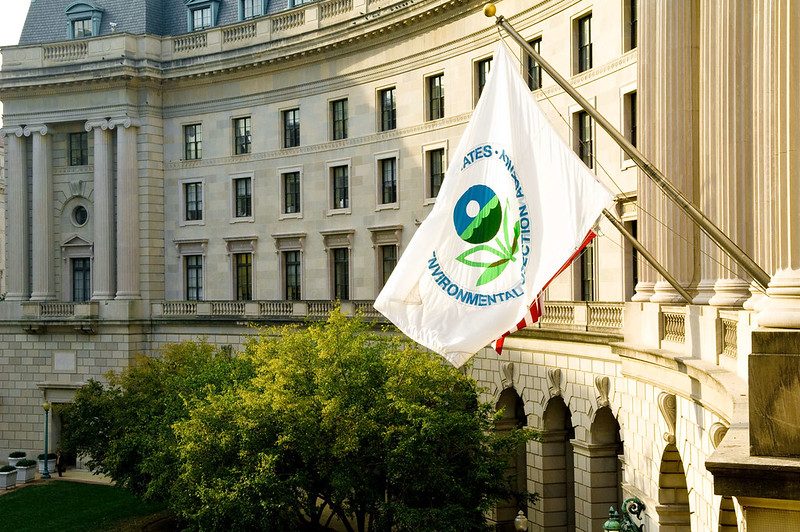
The U.S. Environmental Protection Agency is seeking comment on two proposals that would maintain legally enforceable limits on the most-studied types of ‘forever’ chemicals known as PFAS but would roll back standards established for four other types, including GenX, as well as combinations of the four.
EPA also announced the availability of $1 billion in funding to states to address PFAS and other emerging contaminants in drinking water.
The two EPA proposals, published in the May 20 Federal Register, would roll back the 2024 water quality standards adopted by the Biden administration, which were the first to set maximum contaminant levels (MCLs) for several types of per- and polyfluoroalkyl substances (PFAS).
PFAS chemicals are commonly used in household products containing Teflon or in fire-retardant clothing, as well as in firefighting foam used at U.S. Dept. of Defense bases. The chemicals have been linked to cancer and other negative health outcomes, including liver and thyroid conditions.
A Shift in Policy in Two Proposals
Under the first proposal, drinking water utilities that need more time to implement the 4 parts per trillion drinking water limits for perfluorooctanoic acid (PFOA) and perfluorooctane sulfonic acid (PFOS) could opt in to a two-year extension of the compliance deadline, from 2029 to 2031. Systems that are on track and do not opt in to the extension would still be subject to the original deadline.
The second proposal would rescind limits established by the Biden administration in 2024 on four other types of the chemicals, including the 10 parts per trillion limit for GenX. In 2019, Chemours, a spinoff of DuPont, reached a consent order with the North Carolina Dept. of Environmental Quality and Cape Fear Watch to address high levels of GenX in the Cape Fear River near the manufacturer’s Fayetteville, N.C., facility, which Cape Fear Watch has said negatively impacted the health of residents living near the chemical plant.
EPA says the proposals are a course correction to the Biden administration’s approach to regulating the four additional types of PFAS beyond PFOA and PFOS. According to the agency, “When a maximum contaminant level is rushed, it minimizes the opportunity for meaningful public comment, or fails to follow the statutory process Congress laid out in the Safe Drinking Water Act, utilities face years of uncertainty, ratepayers face avoidable costs, and public health protections can be delayed or undone in court.”
Water utilities, which had advocated for the rollback and are part of a lawsuit challenging the drinking water standards, praised the EPA action. In a joint statement, the American Water Works Association and the Association of Metropolitan Water Agencies said that water utilities are actively addressing PFAS in their communities, but “providing adequate time to research options, select the best approach based on legal circumstances, and implement necessary infrastructure and equipment upgrades is the right path to success.”
Critics, which include environmental groups and leaders of the bipartisan congressional PFAS task force, have cried foul. In a May 13 letter to EPA administrator Lee Zeldin, task force co-chairs Reps. Brian Fitzpatrick (R-Pa.), and Debbie Dingell (D-Mich.) said, “America should be moving faster to get PFAS out of our drinking water—not giving families more years of uncertainty and harm.”
Fitzpatrick and Dingell introduced legislation in June 2025 to codify into law the regulations of all six PFAS chemicals for which limits had been set in 2024. “We will not stand by while protections are weakened,” the lawmakers said.
The Natural Resources Defense Council characterized EPA’s “PFAS Out” program rolling out the news proposals as a “PR stunt” and a capitulation to the water and petrochemical industries. The group’s director of PFAS advocacy Anna Reade said in a statement that EPA “is abandoning the communities in desperate need of drinking water protections, especially those who live near polluting industries.”
The Safe Drinking Water Act allows a maximum of five years to comply with new drinking water standards. The Biden rule, finalized in 2024, had met that requirement by setting the compliance deadline to 2029, according to the NRDC.
Industry groups have challenged the 2024 drinking water limits in the U.S. Court of Appeals for the D.C. circuit. In a preliminary ruling, the court refused the Trump administration’s request to vacate the four standards EPA is proposing should be repealed. Oral arguments are expected later this year.
EPA says it will accept comments on the two proposals through July 20.
The post "EPA Scales Back Limits on PFAS Chemicals in Drinking Water" appeared first on Consulting-Specifying Engineer