


Phased return
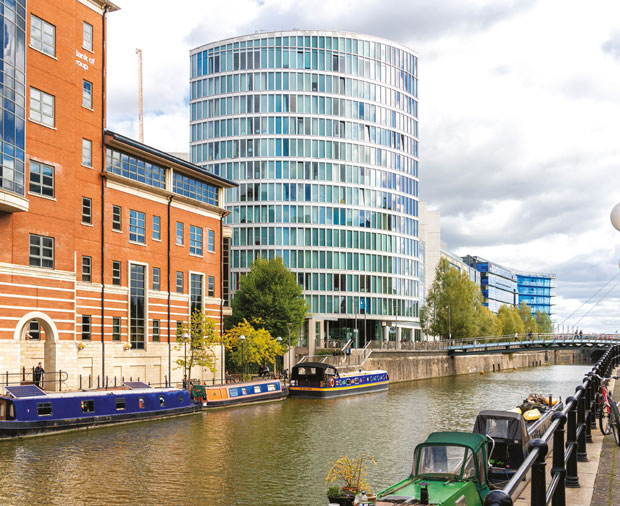
Hargreaves Lansdown’s phased return to office strategy demonstrates what it takes to make hybrid working work.
When a business announces that employees will be expected to spend more time in the office, the conversation usually centres on how many days people will need to attend. Three days rather than two might sound like a straightforward change, but for the facilities, operations and HR teams responsible for making it happen, there’s considerably more to think about.
How will departments organise their office days? What happens to existing flexible working arrangements? Will the building accommodate everyone if employees favour the same days? And how can businesses make sure managers and employees understand what’s expected?
Hargreaves Lansdown, the financial services business with around 2,400 employees, provides an interesting example following its planned September move to a new headquarters in Bristol, as it prepares to introduce a three-day office expectation from the beginning of 2027.
Rather than introducing the requirement immediately, the company has taken a phased approach, giving employees time to settle into the building before the new arrangements begin.
A NEW OFFICE
Hargreaves Lansdown’s new headquarters is in Bristol’s Temple Quarter, close to its previous offices and with good transport connections.
The modern, net-zero building offers spaces for collaboration, focused work and team meetings. Facilities include a coffee shop, gym, amenities for employees who cycle or run to work, a dedicated wellbeing room, mother’s room and multi-faith room. The move also comes as the business enters a new chapter, with a new CEO and plans to develop its products and services.
Gary Logan, Chief Operating Officer at Hargreaves Lansdown, explains: “Our new office has been designed around how our people work today, giving colleagues a range of spaces for collaborative and focused work while supporting the flexibility we all value. We’re excited about the move and the next chapter for Hargreaves Lansdown.”
This investment raises an important question about return-to-office policies. If businesses want employees to spend more time together, they need to consider what those employees will be doing when they arrive. An office filled with desks may work for individual tasks, but if increased attendance is intended to encourage collaboration, employees also need suitable meeting rooms and spaces where teams can work together.
There’s also the question of capacity. A building might have enough desks overall, but that doesn’t necessarily mean it will work comfortably if most departments favour Tuesday, Wednesday and Thursday. For FMs, understanding how the building will be used is every bit as important as knowing how many people it can hold.
 TIME TO ADJUST
One of the more interesting aspects of Hargreaves Lansdown’s approach is separating the office relocation from the introduction of its new attendance expectation. The main move was planned for September 2026, while the three-day requirement will not officially take effect until the beginning of 2027.
According to the business, this transition period is deliberate, allowing employees to settle into their new surroundings and adjust before the policy changes. Its facilities, operations and change teams have carefully planned the relocation to minimise disruption across different business areas.
The company has also involved New Office Champions and Early Adopters in designing and testing the space. Meanwhile, its operations and people teams have delivered sessions to prepare managers for the practical and people-related aspects of the transition.
Moving a workforce of this size is already a significant undertaking. Employees need to familiarise themselves with the layout, facilities and new routines. Introducing different working expectations simultaneously could make it harder to identify whether problems are related to the workplace or the policy.
The transition also gives facilities teams an opportunity to see which spaces are popular, where demand is highest and whether changes are needed before attendance increases.
MAKING IT WORK
A company-wide requirement to attend three days a week might appear simple, but not every department or employee works in the same way.
At Evalu-8 HR Software, we work with businesses managing different employee arrangements, so one area I would pay particular attention to is how working arrangements are recorded. In a business employing hundreds or thousands of people, there can be a considerable difference between the policy HR believes is in place and what individual managers have agreed with their teams.
Some agreements may be contractual, while others have developed informally. Without a clear picture of what’s already in place, businesses risk introducing requirements that conflict with existing arrangements.
There’s also the possibility of different departments interpreting the policy differently. One manager might insist on three fixed days, while another allows employees to choose. This is one of the biggest challenges. It’s easy to focus on writing the policy, but HR teams also need to understand what’s been agreed, who it applies to and whether those decisions are being recorded properly.
If that information is scattered across emails, spreadsheets and departments, applying expectations consistently becomes much harder. This is why I believe HR, facilities and operational managers need to plan together. Each understands a different part of the business, and decisions made by one can directly affect the others.
Facilities and HR teams often approach the same change from different perspectives. One is considering how the building will operate, while the other is managing individual agreements, expectations, and concerns. Neither can plan effectively without understanding what the other is dealing with.
A well-designed office and a clearly written policy are good starting points. What matters is whether those arrangements work for the employees, managers and teams expected to use them every week.

SIX-STAGE POLICY
For organisations reviewing their office attendance requirements, there are six areas I’d recommend considering before introducing a new policy.
- Be clear about why the change is happening: Before deciding how many days employees should attend, businesses need to understand what they want to achieve. If the intention is to improve collaboration, asking everyone to attend three days without coordinating those days may achieve very little. Employees could travel into the office only to spend their time on video calls with colleagues working elsewhere.
- Understand existing arrangements: Review flexible working agreements, contractual arrangements and individual adjustments before introducing new requirements. It’s important to distinguish between informal working patterns and formally agreed arrangements. Employers may need to consult employees about contractual changes, while individual circumstances, including disability-related reasonable adjustments, must be considered appropriately. Understanding what’s already agreed can prevent confusion and disagreements later.
- Look at how the building will be used: Facilities teams should work with managers to establish when employees are most likely to attend. Consider desk availability, meeting rooms, quiet spaces, catering and other facilities that could experience increased demand. A building might have sufficient capacity based on average occupancy, but that tells facilities managers very little about what happens when several large teams arrive on the same morning.
- Prepare managers: Managers are often the first people employees approach when working arrangements change, so they need clear guidance about what they can agree. Consistency matters. Employees will naturally compare arrangements with colleagues, and problems can develop when managers interpret the same policy differently. Any decisions should be made for clear reasons rather than depending entirely on an individual’s manager.
- Communicate and allow time for questions: Sending an updated policy doesn’t automatically mean everyone understands what it means for them. Employees will have questions about working days, existing agreements, commuting arrangements and flexibility. Hargreaves Lansdown’s involvement of employees in testing the workplace, alongside its manager sessions, provides a useful example of preparing people before introducing new expectations.
- Keep reviewing what works: Even with careful preparation, organisations are unlikely to identify every issue before the policy begins. Facilities teams might find certain meeting rooms regularly overbooked, while HR teams receive questions about individual arrangements or inconsistent expectations. I’d encourage businesses to review these findings together. Looking at attendance patterns, workplace demand and employee feedback can help establish whether the arrangements are working and what needs changing.
 JOSH MCNICHOLAS
Evalu-8 HR Software
The post Phased return appeared first on FMJ.