


Surging demand for AI capacity requires a shift in data centre maintenance
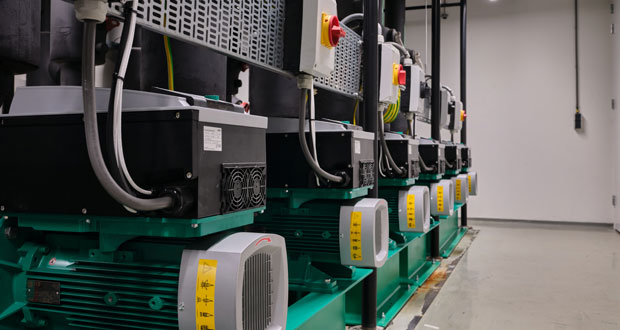
Data centre operators must transition away from reactive and preventative maintenance strategies if they are to keep pace with surging demand for AI capacity, according to Wilo, a premium manufacturer of pumps and pump systems for Building Services, Water Management and Industry.
Wilo claims that the relatively predictable operating environment once considered standard in most data centres is no more. High-density GPU clusters are instead pushing cooling, pumping and power systems to their limits, threatening uptime expectations and hindering operators’ ability to optimise energy and water efficiency.
The manufacturer’s latest research, published in June, found that almost three-quarters (74 per cent) of UK operators still take a reactive or preventative approach to maintenance, despite 45 per cent citing unexpected asset breakdowns as a key challenge.
A report from the International Energy Agency (IEA) found that energy consumption from the AI industry surged by 17 per cent in 2025. It also predicts that consumption will likely double by 2030.
Alice Oakes, Service and Support Manager at Wilo, believes this highlights the importance of adopting systems capable of anticipating failures before they occur, helping to ensure the industry standard of 99.999 per cent uptime does not become a thing of the past.
She said: “AI is changing the industry, not least the world, as we know it. As capacity increases to meet its intensive demands, so do the stakes. The potential consequences of just one asset, a pump for example, failing are only growing. Major disruption, reputational damage and financial penalties follow – we all know it.
“There is therefore an imperative need for maintenance strategies to mirror the advancements in the technology that data centres are now accommodating. They are, after all, critical national infrastructure, meaning every aspect of their operations must be treated accordingly.”
Fully predictive strategies often incorporate condition-based monitoring, using real-time data from assets such as pumps, motors and cooling systems to identify potential issues and automate maintenance scheduling and spare parts planning.
They also continuously measure asset efficiency, helping to meet increasingly stringent targets around power usage effectiveness (PUE) and water usage effectiveness (WUE).
Oakes added: “Predictive maintenance is a fundamental element of a successful setup in today’s data centre environment. Given the mounting pressure on systems, breakdowns simply cannot be unexpected. Operators must plan for every eventuality.”
To download Wilco’s white paper ‘From Reactive to Ready: Rethinking Pumps for Resilience in Today’s Data Centres’ click here.
Facilities & Estates Management Live 2026
- 20-21 October, Business Design Centre, London
- 3 CPD seminar theatres, 100+ suppliers, zero cost to attend
The facilities and estates landscape is evolving fast. Keeping up with new regulations, sustainable practices, and workplace technologies requires the right insights and connections.
That is why you need to be at Facilities & Estates Management Live. It is the premier dedicated event designed to help you learn, network, and truly feel part of our dynamic professional community.
Best of all? It is completely free to attend.
For more information on the event click here.
To register for your Free TICKET please click here.
The post Surging demand for AI capacity requires a shift in data centre maintenance appeared first on FMJ.