


Thermal Energy Network Could Cool New York City Subway Stations and Heat Buildings
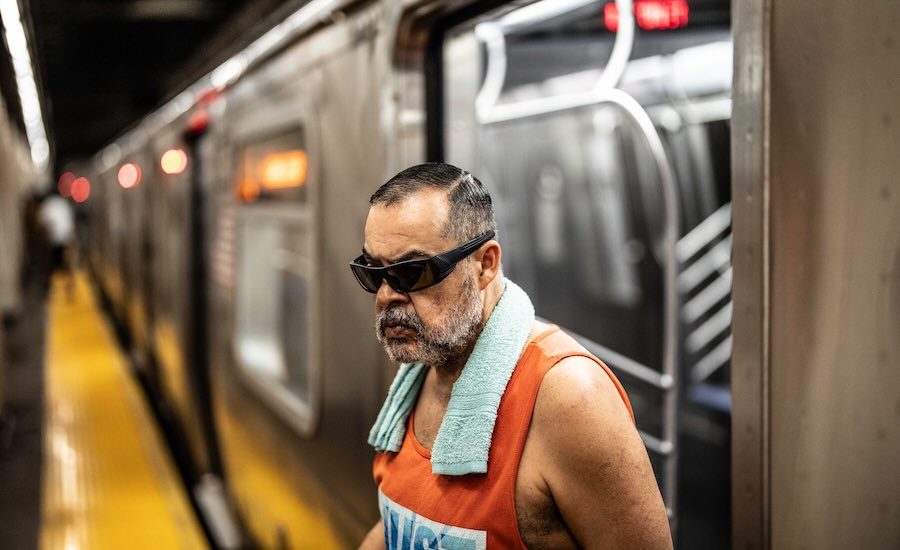
New York State and New York City officials are partnering on a feasibility study for a first of its kind in the U.S. thermal energy network for two Manhattan subway stations earlier this month.
The proposed geothermal network would capture, store and redirect excess heat from the Brooklyn Bridge-City Hall and Chambers Street stations to nearby municipal buildings, cooling the stations in the summer and warming the buildings in the winter. The $800,000 feasibility study announced on Aug. 10 will help determine how much cooling can be achieved and what the energy costs might be for the city.
“Bringing down the temperature is a real challenge in a century-old system with open entrances and vents everywhere,” said Metropolitan Transportation Authority Chair and CEO Janno Lieber in a statement. “Together with Gov. Hochul and Mayor Mamdani, we’re exploring solutions—previously untested in transit—to make stations more comfortable while helping to reduce energy costs.”
Radiant cooling technology, which can be 25 to 35% more energy efficient than traditional air conditioning, would absorb heat by circulating chilled water through panels on walls and ceilings or through tubing embedded in the floors. The heat would be transferred through pipes to geothermal boreholes drilled beneath the abandoned center platform at Chambers Street, and distributed during the winter. The MTA can test this technology at the Chambers Street station without disrupting passenger areas because of an abandoned center platform.
“There is a similar system that has been employed in the London metro system, where they [are] capturing heat from the subway tunnels and distributing to communities in nearby areas,” said Bryan Simpson, the chief decarbonization officer for the Dept. of Citywide Administrative Services (DCAS) Asset and Property Management Team. “While DCAS has looked at various types of geothermal energies, it’s always been a bit difficult just because of our unique building types. But the MTA approached us because they’ve been looking at ways to do thermal energy networks and heat recovery while also providing air conditioning to their subway stations.”
The buildings that would be part of the thermal energy network include the David N. Dinkins Manhattan Municipal Building at One Center Street and three adjacent buildings: the Surrogate’s Courthouse, the Tweed Courthouse and City Hall.
“Something that makes it work so well is that the [Brooklyn Bridge-City Hall] subway station is actually directly underneath the building that we’re interested in,” said Simpson. “We actually have this opportunity for this mini thermal network already built in.”
Simpson says that the system would involve the installation of multiple heat pumps in the municipal buildings to transfer the heat from that geothermal ground loop into water loops that would supply heating, and potentially cooling, to the building. He also pointed out that One Center Street is transitioning to a hot water heating system.
“Being able to use those heat pumps to transfer the water or the energy from the geothermal loop to our hot water heating loop in the building allows a pretty seamless way for us to make use of that energy,” he said.
Simpson points out that it is difficult to decarbonize historic buildings. In the case of City Hall, it’s a challenge to site new equipment outside. But an underground system gets around that.
“Thinking outside the box a little bit allows us to actually do this…intelligent heating system that allows us to maintain the historic nature of the buildings,” he said. “This won’t cover the whole load of those buildings, and we don’t know yet until you get done with the study just how much heat we’ll be able to generate for the buildings. But even offsetting some meaningful percentage with this would really go a long way towards that effort.”
The contract for the feasibility study is expected to be awarded this fall. It will be conducted in partnership with New York City Dept. of City Administrative Services (DCAS), the Mayor’s Office of Climate and Environmental Justice, the Office of the Deputy Mayor for Operations and the MTA. If feasibility is confirmed, design work will begin in early 2027. Sources of funding for the system have not yet been determined.
The post "Thermal Energy Network Could Cool New York City Subway Stations and Heat Buildings" appeared first on Consulting-Specifying Engineer